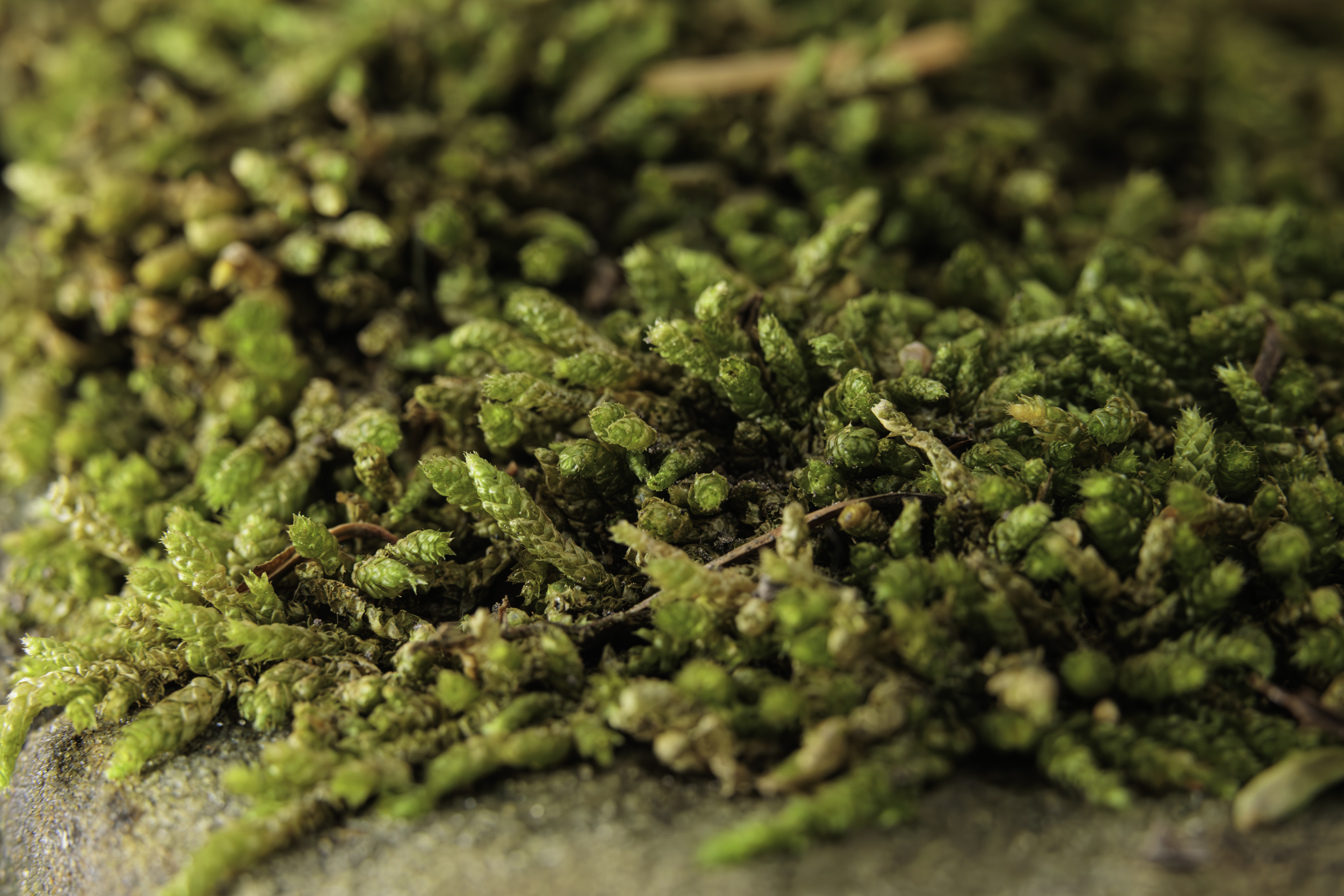
Plant conservation efforts in North America seldom focus on bryophytes, despite the fact that they make up around 10 percent of the continent’s flora. At the heart of the issue is a lack of understanding of bryophytes themselves. A Missouri Botanical Garden project aims to change that by providing sound scientific support for bryophyte conservation efforts starting with a catalogue of all North American bryophytes.
What are bryophytes?

Bryophytes are a group of non-flowering, non-vascular plants that includes mosses, liverworts, and hornworts.
What is the difference between a vascular and non-vascular plant?Vascular plants have specialized systems to ransport water, nutrients, and food throughout the plant. Non-vascular plants lack true roots and don’t have specialized vascular tissues containing lignin, a substance that strengthens plant walls.
How Prevalent are bryophytes?

Bryophytes are widely distributed across diverse ecosystems including deserts, forests, and tundra. Scientists estimate more than 20,000 species of bryophytes exist globally. In North America, experts estimate there are about 2,100 species of bryophytes, about 10 percent of known plants.
Why conserve bryophytes?

Bryophytes face the same threats as other plant species—habitat loss, changing climate, and pollution. These threats are intensified for bryophytes, which are highly sensitive to environmental changes.
Conserving bryophytes goes beyond saving the plants themselves. Bryophytes are key contributors to ecosystem stability and resilience. Bryophytes create a unique microhabitat known as the bryosphere. These microhabitats support diverse communities of bacteria, cyanobacteria, fungi, algae, micro and meso invertebrates.
What protections currently exist for bryophytes?

South Llano Springs moss, Donrichardsia macroneuron, is the only federally-listed species of moss. Photo courtesy of U.S. Fish & Wildlife Service.
Of the 2,100 North American bryophyte species, only one is federally protected under the Endangered Species Act. At the state level, only 25 programs across the U.S. actively track bryophytes.
The Known Unknown: What Bryophytes need protections?

A recent IUCN report found that 22% of European mosses, liverworts, and hornworts face the threat of extinction, but no comparable estimates exist for North America.
Scientists point to a lack of expertise, identification skills, and an overall poor understanding of the bryophyte flora as part of the reason why. Perhaps the largest reason, however, is there is no centralized source of information about North American bryophytes. These data would allow scientists to know how many species are threatened, and support their conservation.
“So, while expert knowledge on the rare species of bryophytes usually does exist, it is often underutilized,” said John Atwood, Bryophyte Curator in the Missouri Botanical Garden’s Herbarium.
Building the Foundation for Bryophyte Conservation

Atwood and John Brinda, Assistant Scientist of Plant Taxonomy and Evolution at the Missouri Botanical Garden, are working to build this foundation for bryophyte conservation through a project with the Bryophyte Conservation Alliance (BCA).
The first step is creating a catalogue of all North American bryophytes. While checklists of North American bryophytes exist, the catalogue would be the first of its kind.
Plant catalogue vs. checklist
Checklists and catalogues are foundational to plant conservation efforts. In botany, a plant checklist is a list of the scientific names of all plants in a specific geographic area.
A catalogue is a more thorough version of a checklist that is based on verified and cited herbarium specimens.
How do you build a Catalog?

Scientists start by compiling existing information from relevant checklists and floras.
What is a flora? A flora is a list of all known plants in a specific geographic area including morphological descriptions, keys, and illustrations.
For this project, Atwood and Brinda are looking at state, provincial and regional checklists for North American bryophytes that have been published over the past 130 years. Additionally, they have compiled name and distribution records from the Flora of North America volumes for mosses.
So far, that information includes approximately 2,100 bryophyte species and more than 50,000 North American distribution records.
Once this first phase is complete, scientists will add verified specimens that represent each species and its corresponding geographic information to the dataset.
Scientists will continuously update the catalogue online to incorporate changes and new information as they scrutinize herbarium specimens.
What Resources Does the Missouri Botanical Garden have to Support this work?

The Missouri Botanical Garden has a decades-long history of being a hub for bryophyte research that remains very active. The Garden’s Herbarium is home to one of the largest and most comprehensive bryophyte collections in the world. The Peter H. Raven Library holds a massive collection of articles, theses, technical reports, and books about bryophytes. The Garden is also a major indexing center for published bryological research, compiling quarterly lists of bryological literature that are available in a searchable, online format.
What role does the Garden’s Herbarium Play in the Project?

The most reliable way for scientists to identify bryophyte species requires examining the plants under a microscope, making vouchered specimens the best source of species distribution data.
A vouchered specimen is a dried, and mounted plant specimen stored in a herbarium. Learn more about the Garden’s Herbarium. >
The Missouri Botanical Garden has one of the largest herbaria in the world with nearly 8 million specimens. This includes more than 600,000 vouchered bryophyte specimens.
The Garden is working to digitize these collections, most recently through the Revolutionizing Species Identification project.
“The Missouri Botanical Garden’s herbarium will be an invaluable resource for verifying specimens to be listed in the catalogue,” Atwood said. “In general, digitization has vastly improved our ability to locate specimens that can serve as vouchers for our catalogue or represent new records.”
What other institutions will partner on this project?

The Missouri Botanical Garden will be home to the Center for Bryophyte Conservation in North America, but the Garden can’t do this work alone! Scientists are working to establish five regional working groups in the U.S., as well as two in Canada. Regional working groups will update lists for their areas, deliver training, coordinate conservation efforts, and reassess the conservation status of species. They will also collaborate with appropriate representatives from state agencies.
“We plan to galvanize those interested in bryophytes from across North America,” Atwood said.
Catherine Martin
Senior Public Information Officer
Leave a Reply