The Literary Garden: The Cultivation of Plants & Gardens in Narratives brings together the botanical and literary worlds at the Garden’s Stephen and Peter Sachs Museum.

The exhibition explores over 60 literary works and their connections to plants. Because we couldn’t possibly highlight them all, we’ve picked a few of our favorite plants featured in the exhibit. We hope these inspire you to create your own literary garden.
Wild Ginger (Asarum canadense)–Featured in The Flora of Missouri

Native to the eastern United States, wild ginger (Asarum canadense) makes for excellent ground cover in shady areas. It is a low-growing, rhizomatous perennial native.
Rhizomatous means possessing, resembling, or spreading via a rhizome—a modified, horizontal underground stem. Instead of growing straight down, these stems creep horizontally, sprouting new roots downward and fresh shoots upward from points called “nodes”.
Wild ginger will slowly spread to form colonies but is not aggressive. It is an excellent companion plant for smaller ferns such as marginal wood fern (Dryopteris marginalis), spring ephemerals such as Virginia bluebells (Mertensia virginica), and woodland sedges such as brome-like sedge (Carex bromoides).

Literary connection: The Flora of Missouri is an invaluable resource for botanists, taxonomists, ecologists, and outdoor enthusiasts who are studying the plants that call our state home.
Made up of three volumes (each weighing in at approximately 4 lbs), the Flora contains detailed botanical descriptions of over 2700 species of plants found in Missouri.

As part of The Literary Garden exhibit, artist Jessica Palmer created 100 collages representing just a small part of the expansive Flora. Missouri Wildflower Florilegium: Wild Ginger by Jessica Palmer, ca. 2025, Image by Matt Kastigar, Herbarium.
Common fig (Ficus carica)–Featured in The Island of Missing Trees

Native to the eastern Mediterranean and Middle East, the common fig (Ficus carica) can be found around the world. Gardeners and farmers have cultivated figs for their delicious fruit.
In St. Louis, we recommend planting a cold-hardy variety such as ‘Brown Turkey’ or ‘Chicago Hardy’. These will die back to the ground over the winter and produce fruit on the new growth from late summer to the first frost.

Literary connection: Evidence suggests figs are one of the earliest fruits domesticated in the Fertile Crescent around 7,000 years ago. Elif Shafak’s 2021 novel The Island of Missing Trees includes a fig tree as one of three narrators, connecting the two other disparate narrators across time, history, and place.
black-eyed Susans (Rudbeckia hirta)–Featured in Gladiola Garden

The cheerful, yellow flowers of black-eyed Susans (Rudbeckia hirta) are a common sight on prairies, roadsides, and in woodland openings across Missouri and throughout most of the eastern United States.
They prefer full sun and tolerate a wide range of conditions, including drought and urban soils. This plant typically has a short life span, so it’s important to let at least some of the flowers go to seed and allow the next generation of plants to establish; otherwise, they may disappear from the garden entirely.

Literary connection: In Effie Lee Newsome’s 1940 collection of children’s poems Gladiola Garden, young Black readers can see themselves reflected in the stories of fields and forests, flora and fauna. From crickets to turtles and honeysuckle to black-eyed Susans, Newsome’s poems–alongside wonderful illustrations by Lois Mailou Jones–are enjoyable for readers of all ages.
Snowdrops (Galanthus nivalis)–Featured in The Secret Garden

A true harbinger of the spring to come, snowdrops (Galanthus nivalis) are small bulbs that bloom in late winter, even emerging through light snowfall.
Gardeners should plant snowdrops in groups or swaths in sunny areas with evenly moist but well-draining soil. You can also plant them under deciduous trees, which will provide the bulb foliage with plenty of sun before the trees leaf out in the spring.

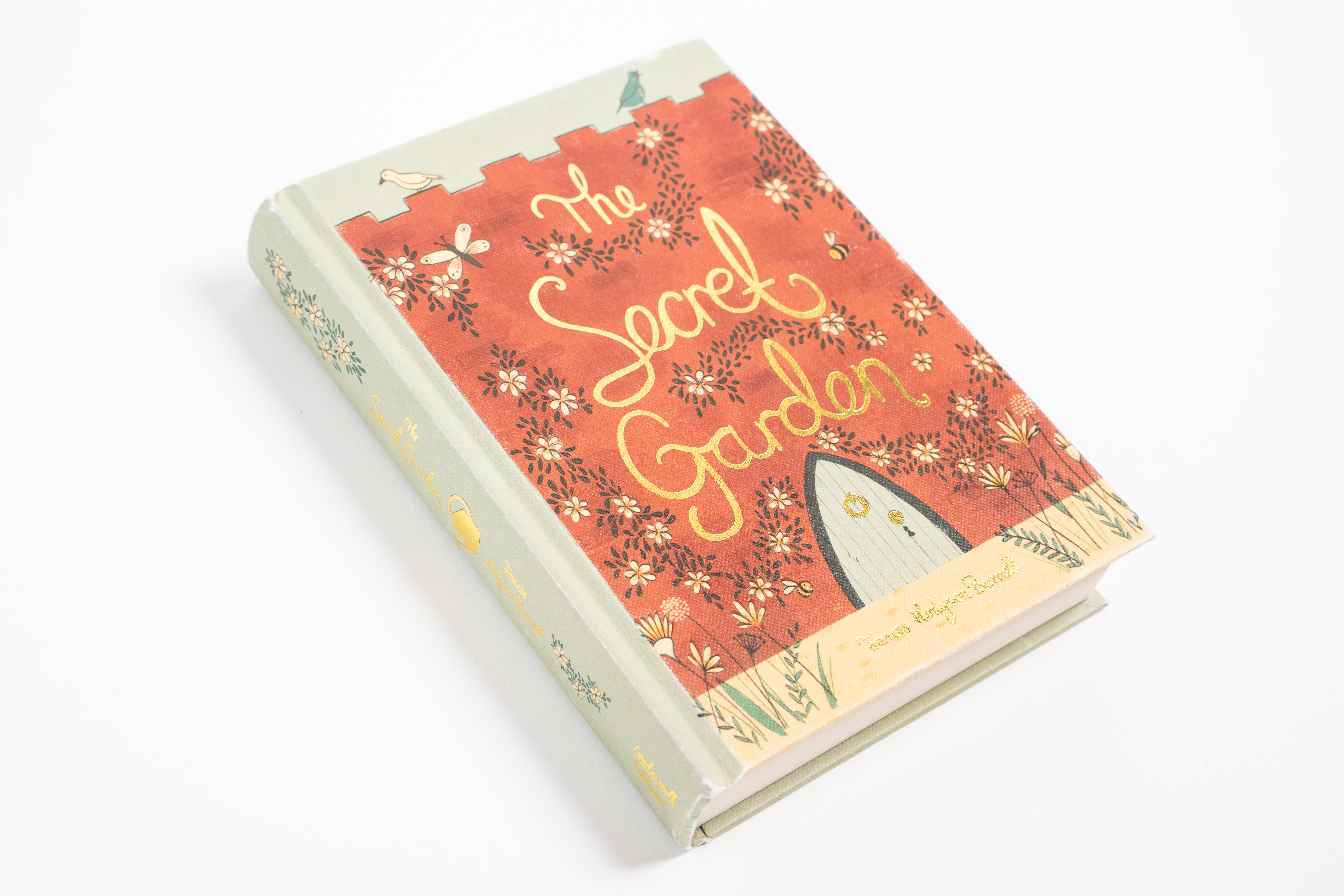
Literary connection: Snowdrops and other early spring bulbs, including jonquil daffodils and crocus, are described in Frances Hodgson Burnett’s 1911 children’s novel The Secret Garden. Burnett highlights how these plants can survive all on their own in the titular walled garden, locked for ten years. These bulbs are indeed resilient and will naturalize readily in suitable growing conditions.
Queen Anne’s lace or wild carrot (Daucus carota)–Featured in The Tale of Peter Rabbit

Also known as Queen Anne’s lace, wild carrot (Daucus carota) is the progenitor species to cultivated carrots that we eat and enjoy.
In botany, a progenitor species is an ancestral plant species that gives rise to new, distinct descendant species through speciation or hybridization.
Native to Europe and the Middle East, this species has naturalized in temperate regions around the world. You can often find it growing in disturbed areas, roadsides, and old fields.
Florists often use Queen Anne’s lace as a cut flower in fresh arrangements. This species is biennial, meaning that plants grown from seed will flower the following year.

Literary connection: Although carrots are not on the menu when Peter Rabbit helps himself to Mr. McGregor’s vegetables in Beatrix Potter’s 1902 classic The Tale of Peter Rabbit, another of her cautionary tales, The Story of A Fierce Bad Rabbit, published in 1906, does include carrot theft.
Literary Garden Exhibition
Explore the Literary Garden exhibition at the Stephen and Peter Sachs Museum through March 31, 2027.

Justin Kandra | Horticulturist with the Kemper Center for Home Gardening
Leave a Reply