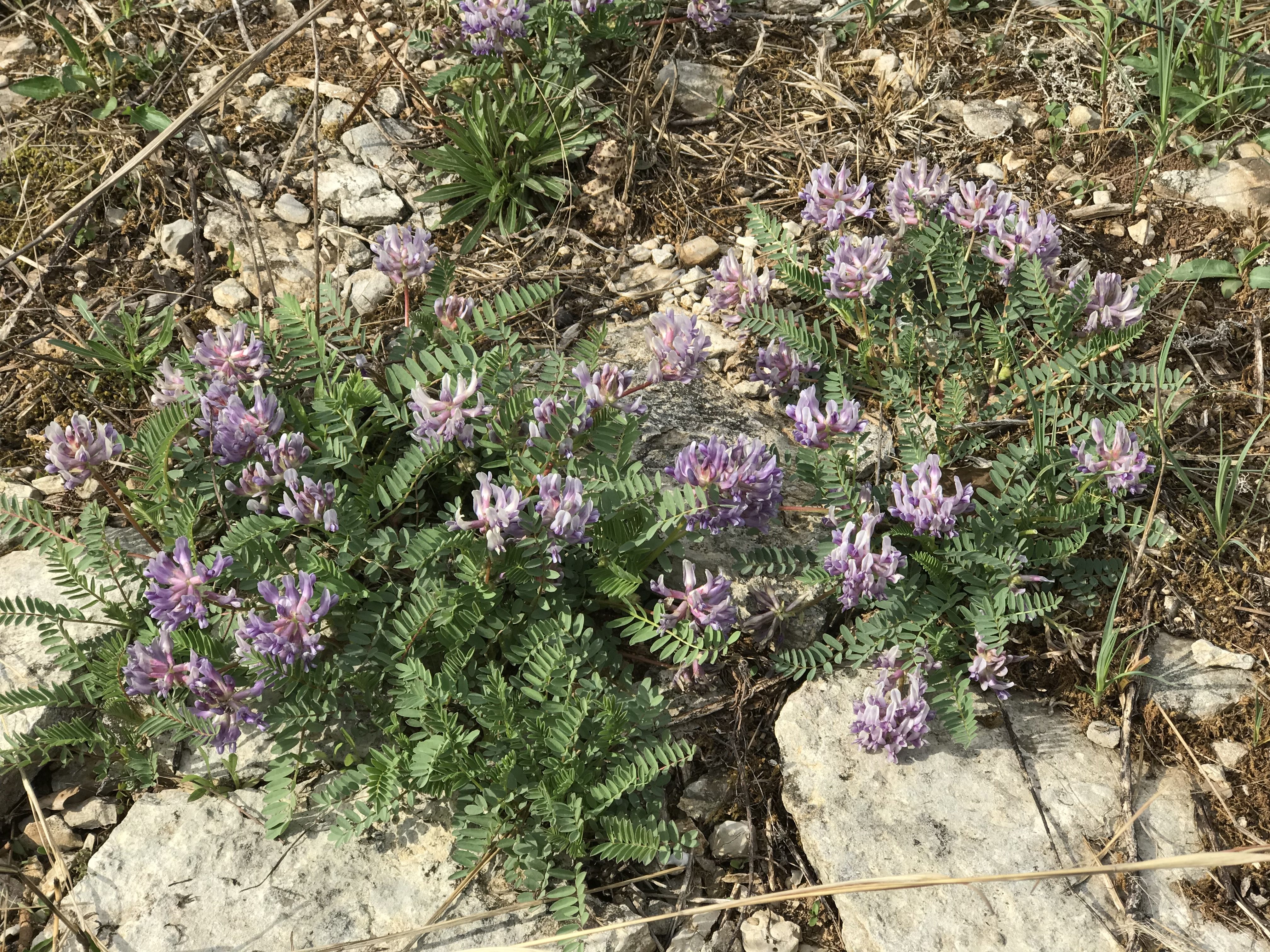
About 35 miles outside of Nashville in Murfreesboro, Tennessee, plants grow that can’t be found anywhere else in the world. Among them is Pyne’s ground plum. Scientists only know this plant, oddly a member of the pea family, to grow naturally in nine locations in this small area.
The Missouri Botanical Garden has been working with local partners to protect this precious plant since the 1990s. Since then, local partners have located three new populations. Scientists expect more are out there, but may be lost before scientists confirm.
“As the area around Murfreesboro rapidly develops, species that grow nowhere else in the world are losing their remaining habitat. It’s crucial to protect and conserve these unique species when we can before they disappear,” said Matthew Albrecht, Vice President of Conservation and Restoration at the Missouri Botanical Garden.
Hot Spot for Special Species in Suburbia

Endemic species are plants or animals that only grow in one area in the world. Islands like Madagascar and Australia are famous for endemic species, which makes sense given their isolated geography.
Developing suburbia in the middle of the U.S., like Murfreesboro, may seem an unlikely place for unique species. But Albrecht said the area is a “hot spot for rare endemic species.”
Scientists refer to this ecoregion as the Nashville Basin or Central Basin of Tennessee. It comprises unique limestone glades that harbor glade plants found nowhere else in the world.
“One hypothesis is that the ancient exposed limestone in this region creates specialized open habitats that favors the formation of endemic species and a specialized flora,” Albrecht explained. “With long-term climate shifts, plants have become isolated over time, and new species formed.”
Tennessee coneflower, Echinacea tennesseensis, is another example. Its closest relative is the narrow-leaf coneflower, Echinacea angustifolia, of Midwestern prairies, but it is a distinct species. Due to few populations, the U.S. Fish and Wildlife Service listed this species as endangered for many years. In 2011, it was “delisted” thanks to conservation efforts to protect the species. The Garden supported these efforts by collecting and banking seed from wild and restored populations.
What is Pyne’s Ground Plum?

Like Tennessee coneflower, Pyne’s ground plum, Astragalus bibullatus, has a close prairie relative, the groundplum or buffalo plum, Astragalus crassicarpus. Both species are in the legume family. Scientists described Pyne’s ground plum as a new species in 1987. Its common name refers to its discoverer, Milo Pyne.
The plant’s edible fruits look like plums when immature, but taste more like a sweet pea, Albrecht said.

Historically, the species grew in shallow-soil grasslands with scattered trees. Grassland fires and large animals, like buffalo and elk, probably kept woody plant species from shading it out.
In recent years, humans have rapidly developed this area, and Pyne’s ground plum’s natural habitat is largely gone. There are some small protected areas that contain populations of the species, but they are “completely surrounded by neighborhoods or other developments,” Albrecht said.
Collection to Conservation

The oldest specimen in the Garden’s Herbarium dates back to the 1890s, when the species was still thought to be buffalo bean. Garden conservation work began in 1991 when the U.S. Fish and Wildlife Service listed this newly-described species as Endangered. Garden scientists have been using those seeds to reintroduce the plant into its natural habitat.
“We’ve introduced thousands of plants to protected natural areas and we have been tracking each one of those plants,” Albrecht said. “They all come from seeds in the Garden’s Seed Bank.”
The Garden’s reintroduction program is conducted in partnership with the Tennessee Department of Environment and Conservation and the United States Fish and Wildlife Service.
The first reintroductions weren’t successful, so the team tried different approaches to see what it needed. At first, they thought the species preferred shaded areas. Quickly they learned it needed high sunlight and deep soil to thrive.
Now, there are certain sites where the species is doing well and Albrecht and collaborators see “indicators of success.” But, Pyne’s ground plum is slow growing, low to the ground, and its seeds take years to germinate.
“The whole process takes a while before we can see success happening,” Albrecht said. “Whose to say if I will walk away in my lifetime and say this has been successful.”
Glimmers of Hope

While reintroduction work is slow going, there has been cause for celebration along the way. In May of 2026, the U.S. Fish and Wildlife Services found a new population of Pyne’s ground plum on private property. This was the third such discovery in the Garden’s 30 years working with the species.
“I am surprised but not completely shocked,” Albrecht said. “I always suspected there are more populations of this species hiding on private property just barely hanging on.”
In the most recent discovery, a Garden collaborator with the U.S. Fish and Wildlife Service stumbled across Pyne’s ground plum while surveying private land. He knew it was Pyne’s ground plum because of his work with the Garden. He sent a photo to the Garden team, who confirmed it was indeed a new population.
Similar discoveries happened in 2005 and 2015. Albrecht thinks it’s likely there are more populations out there, although likely only a few. Education could be key to finding them, he said. Many landowners may be unaware of the unique and rare plants growing on their property
“Community involvement can be a key tool in conservation,” Albrecht said. “If landowners know what rare species to look for, they can help with protecting and managing this threatened species.” Albrecht and partners are working with a private landowner to monitor and manage a population of Pyne’s ground plum on their property. These efforts are already showing promise, with plants beginning to flower and set seed for the first time in many years.
Catherine Martin
Senior Public Information Officer
Leave a Reply