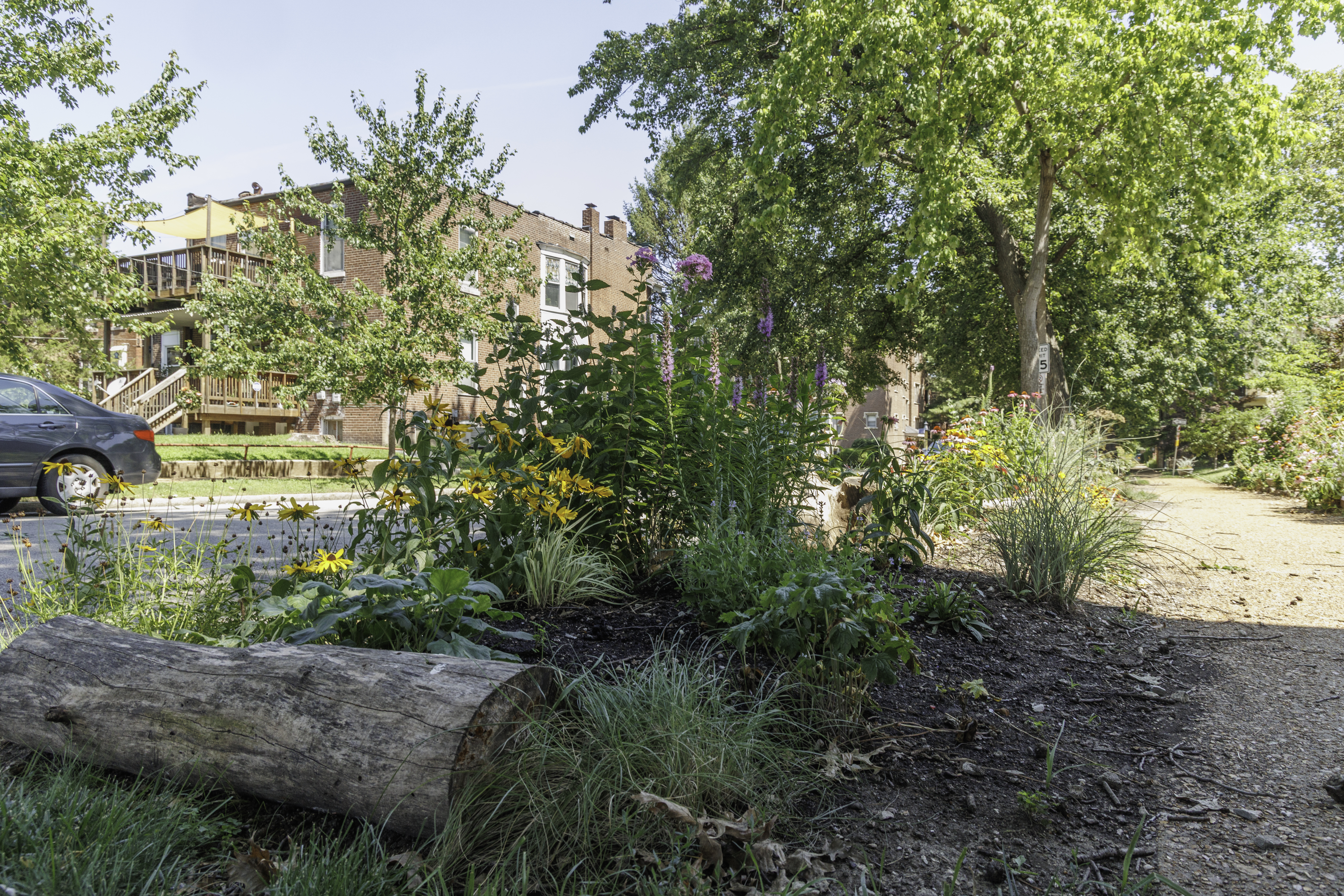
Prairies are one of the most biodiverse ecosystems on Earth, supporting thousands of species of plants and animals . These grasslands once covered most of the Midwest, including Missouri, but today only 1 percent of American prairies remain. Planting a prairie may seem like a large project requiring a lot of space, but even a tiny “pocket prairie,” can support biodiversity.
The Garden’s Kemper Center for Home Gardening shares the below the basics of planting a pocket prairie in a home garden.
What is a pocket prairie?

Pocket prairies, also called micro prairies, are small plantings of native prairie plants, generally less than 1 acre in size. Typically, home gardeners plant these in urban or suburban areas where turfgrass lawns and other non-native vegetation dominate.
Larger prairie restorations and reconstructions require specialized equipment, maintenance, and know-how that the average home gardener might not have access to. For help with prairie plantings larger than an acre, reach out to your local Missouri Department of Conservation office.
What are the benefits of a pocket prairie?

Pocket prairies are small but mighty when it comes to their impact. Even small groups of native plants can provide food and shelter to native insects, birds, and other fauna. Pocket prairies are an excellent first foray into native plant gardening. Their small size makes weeding and maintenance easier. They can also serve as an approachable way to introduce the world of native plants to kids, family, and friends. In a front yard, a pocket prairie can spark conversations with passersby who might not know the benefits of native plants.
Where should I install a pocket prairie?

If this is your first native planting project, start with a relatively small area such. A 10′ x 10′ square or 20′ x 5′ strip in a sunny, level spot works well. Like naturally occurring prairies, pocket prairies will thrive in full sun. Most prairie plants will tolerate part shade, but the more sun the better. Getting plants established on level ground is typically easier than a slope. However, many prairie species will grow on slopes and their deep root systems will help to reduce erosion.
How do I install a pocket prairie?

After you have chosen a location, remove any existing vegetation, including turfgrass. This can be done in several ways, including sheet mulching, solarization, and using herbicides. If the bed is in the middle of a turfgrass lawn, create an edge using bricks, stones, or a sharp spade so that the grass does not infiltrate into the bed. Consider using existing hardscaping such as a walkway, sidewalk, patio, or driveway to help delineate one or more sides of the pocket prairie. Once the existing vegetation is removed, the next step is to plant the area with native prairie species.
Which plant species should I choose?


Select plants that are native to our area and will grow well in your soil conditions. Use a plant search database such as Plant Finder or the Grow Native! Plant Database to narrow down your choices and find out which plants will work for your site.
Top 5 Pocket Prairie Plants for St. Louis
The Home Gardening team recommends the below prairie plants for your St. Louis pocket prairie.
- Sideoats grama, Bouteloua curtipendula

An excellent prairie grass with narrow, gray-green leaves, showy seedheads, and a compact growth habit.
Height: 1.5-2.5′
Spread: 1.5-2′
Bloom time: mid to late summer
- Wild petunia, Ruellia humilis

Showy, tubular, lilac purple blooms somewhat resemble petunia flowers, giving this native perennial its common name.
Height: 1.5-2 feet
Spread: 1.5-2 feet
Bloom time: late spring though summer
- Asclepias sullivantii(prairie milkweed)
This milkweed species somewhat resembles common milkweed, Asclepias syriaca. Prairie milkweed is shorter and does not spread as aggressively.
Height: 2-3 feet
Spread: 1-1.5
Bloom time: Early to mid summer
- Allium stellatum (prairie onion)

Round clusters of bright pink, star-shaped blooms appear in mid to late summer above clumps of narrow, strap-like leaves.
Height: 1-1.5 feet
Spread: 6 inches to 1 foot
Bloom time: mid summer to early fall
- Cliff goldenrod, Solidago drummondii

Panicles of small, bright yellow flowers bloom in fall at the ends of arching branches, giving this goldenrod a cascading appearance.
Height: 1.5-3 feet
Spread: 1.5-2.5′
Bloom time: late summer through early fall
Should I sow seed or use containerized plants?

Both seeds and container grown plants can be used to establish a pocket prairie. Each has their own pros and cons. Container plants (or plugs) are more expensive but can establish faster and grow larger in less time. Weed control tends to be easier in a bed of containerized plants because mulch can be applied and individual plants are easier to identify. Seed mixes are relatively inexpensive but may require stratification (a cold period) for proper germination. Native plants in the seedling stage are small and harder to identify.
Learn more about planting prairies

For detailed information on all the topics mentioned here, check out the Guide for Beginning Native Plant Gardeners from our friends at Grow Native! and Landscaping with Native Plants: A Gardener’s Guide for Missouri, a collaborative effort from our friends at Shaw Nature Reserve and the Missouri Department of Conservation.
Justine Kandra, Horticulturist


Leave a Reply