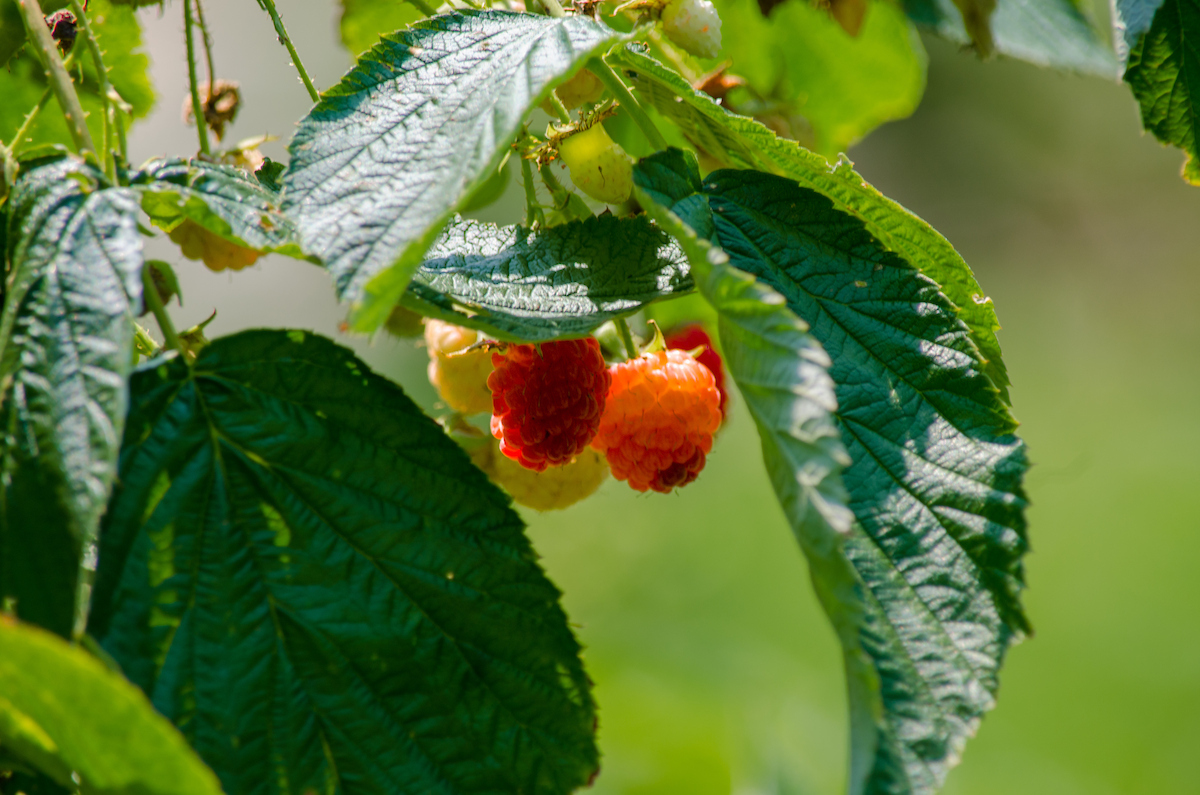
Summer is peak berry season here in the St. Louis area. Locally grown raspberries, blackberries, strawberries, and blueberries are ripening and can be found at farm stands and farmers markets around the region.
The tender, sweet fruits can be picked at the peak of ripeness, unlike berries at the grocery store, which are selected for ease of cross-country shipment rather than flavor.
But did you know that it’s possible to have a bountiful berry harvest from your home garden, even if you don’t have that much space?
Learn the ins and outs of home berry growing from the Kemper Center for Home Gardening and give these perennial fruit plants a try!
What even is a berry?
That depends on who you ask. Scientists have a very strict definition, while chefs consider berries a much broader category of fruit.

Before you read any further, test your berry knowledge with our Botanical Berry Quiz.
Scientific definitions of A berry
If you ask a botanist what a berry is, they’ll say it’s a fruit originating from a single ovary containing multiple seeds surrounded by a fleshy mesocarp.
Put a bit more simply, a berry is a fleshy fruit formed from a single flower that contains multiple seeds.

Many of the fruits we think of as berries are not true berries. These include raspberries and blackberries, which are technically aggregate fruits, and strawberries, which are technically accessory fruits and not true berries.
A few true berries include blueberries, gooseberries, grapes, avocados, and bananas.
Culinary definitions of A Berry
Most chefs, bakers, and cooks consider berries to be small, tender fruits with sweet and tart flavors.

Three of the most popular types of berries are brambles, which include raspberries and blackberries, strawberries, and blueberries.
Although these three types of berries are often grouped together, they do have different care requirements to consider before adding to your home garden.
How can I grow berries?
Berries can be grown in just about any sunny spot in a home garden, even in pots on a porch or balcony. They prefer well-draining soil, and even moisture will produce the best fruit.

But many berries are adaptable to a range of conditions. Brambles in particular are tolerant of clay soils and drought once they are established. Building a raised bed or planting dwarf plants in a container can help overcome landscape challenges such as poor soil conditions or small spaces.
Berries can be purchased as dormant, bare-root plants or container grown plants and are best planted in early spring. This gives the plants plenty of time to get established before winter.
Plants may not flower or set fruit in their first year, but this is actually a good thing because you want the plant to establish a strong root system before setting fruit. It’s even recommended to remove the flowers from strawberry plants during their first growing season.
Raspberries

These flavorful fruits come in a wide range of colors and growth habits, which can make choosing which ones to grow a bit overwhelming.
But like other brambles, raspberries are generally easy to grow in the St. Louis area and will produce a good yield of berries after a few years of establishment.
Red, black, purple, and yellow raspberries are classified by the color of their fruit when ripe. Black and purple raspberries tend to produce fewer suckers and will spread primarily when the tips of their canes touch the ground. With proper trellising, they will generally stay in one large clump.
Red and yellow raspberries tend to spread much more by suckers and will form the quintessential bramble patch if left to their own devices.
Individual raspberry canes will only live for two seasons. Raspberries tend to fruit only on canes from last season (floricanes), but some varieties will fruit on both floricanes and the current season’s canes (primocanes). Varieties that fruit only on floricanes are called summer-bearing, and the fruits tend to ripen in early summer. Varieties that can fruit on primocanes are called fall-bearing or ever-bearing and will produce a crop in late summer to early fall.
Recommended Raspberry varieties:

- ‘Heritage’ – A vigorous, fall-bearing red raspberry. Prune last year’s canes in late winter or early spring to produce one, large, late crop, or leave the canes from the previous season to get both a summer and fall crop.
- ‘Bristol’ – A hardy, high-yielding black raspberry that fruits on floricanes. The fruits are large and flavorful.
- ‘Royalty’ – A purple raspberry that produces large, sweet fruits on floricanes.
- ‘Fallgold’ – Golden yellow, firm and sweet berries are borne on primocanes and floricanes.
Blackberries

Blackberry varieties are divided by growth habit and thorniness: erect, semi-erect, or trailing and thorny or thornless.
Erect varieties have upright canes, while trailing varieties have canes that require a trellis for support.
Semi-erect varieties fall somewhere in the middle.
Thornless varieties have smooth stems but tend to be less cold hardy than thorny varieties.
Similar to raspberries, blackberry canes are biennial, meaning they only live for two seasons, and different varieties will fruit on either the floricanes or primocanes.
Recommended blackberry varieties

- ‘APF-236T’ Baby Cakes – A member of the popular Bushel and Berry series, this diminutive, thornless, erect blackberry can be easily grown in a large container and will produce fruit on the primocanes.
- ‘Navaho’ – A robust, highly rated, erect, thornless blackberry that bears fruit on the floricanes.
- ‘Triple Crown’ – A vigorous, semi-erect, thornless variety that produces large, firm berries with a sweet and tart flavor and small seeds on the floricanes. Does best with a support structure or trellis.
Strawberries

Possibly the easiest and most rewarding berry to grow at home, strawberries will produce an abundance of delicious, sweet fruits in garden beds, containers, or hanging baskets.
Strawberry varieties are divided into three main groups based on when they bear fruit: junebearing, everbearing, and day-neutral.
Junebearing varieties produce one crop of large fruits in early summer. They tend to produce more runners than the other types of strawberries.
Everbearing is somewhat of a misnomer, since these varieties will typically not bear fruit non-stop, but rather produce two crops when the days are shorter: one in spring and a smaller one in fall.
Day-neutral varieties can potentially set flower buds at any point in the growing season and are not influenced by day length, but typically stop producing once temperatures rise above 85°F.
Recommended strawberry varieties:

- ‘Allstar’ – This junebearing strawberry produces large, firm, glossy fruits with excellent flavor. It also boasts good disease resistance.
- ‘Ozark Beauty’ – A hardy, vigorous, everbearing variety with good production of large, tasty fruits.
- ‘Tristar’ – This day-neutral strawberry produces berries on the smaller side, but with excellent, sweet flavor. A good choice for containers or hanging baskets.
Blueberries

Although the soil in the St. Louis area is not ideal for growing blueberries, there are ways to grow these tasty berries successfully.
Blueberries require acidic soil (pH level 4-5), so a soil acidifier can be added to the soil yearly to help keep the pH in the proper range. They also grow best in well-draining soils, which can be hard to come by here in St. Louis where clay soils dominate, so the bushes can be planted on in raised beds or mounds to improve drainage.
Dwarf blueberry cultivars can also be grown in large containers. Pots have excellent drainage and it’s much easier to control the soil pH in a container.
Recommended blueberry varieties:

- ‘Herbert’ – A hardy blueberry that can reach 6-8′ tall at maturity.
- ‘ZF06-179’ Jelly Bean – Another member of the Bushel and Berry series, this small blueberry will only reach around 2′ tall and can be easily grown in a container.

Got plant questions? Ask the Garden’s Horticulture Answer Service
Garden staff and Master Gardener volunteers provide personalized answers to your specific gardening questions over the phone or through email.
- Phone: 314-577-5143
- E-mail: plantinformation@mobot.org
What To do with your berry harvest
Freshly-picked berries from a home garden are a delightful treat in and of themselves. You can also use your berries in smoothies, desserts, baked goods oatmeal, or yogurt. If you’re feeling really creative, you can try making syrup or wine.
But if you find yourself with a larger harvest than you can eat, here are few ideas to prevent food waste:
- Give your berries to loved ones.
- Freeze your excess berries. When properly stored, frozen berries an keep 8-12 months.
- Make jam or preserves. When properly canned and kept in a dark place, jam and preserves can last up to two years
You can always add berries back to your compost pile/bin if you aren’t able to eat all of them.
Justine Kandra | Horticulturist at the Kemper Center for Home Gardening.
Leave a Reply