Shaw Nature Reserve aims to inspire our community to be good stewards of natural environments, including the wildlife that call Missouri home.
Over the years, birders, naturalists, and wildlife photographers have documented an amazing ecosystem of plants and animals spread over the 2,400 acres. We hope you’ll enjoy some snapshots of the wildlife that have come to call Shaw Nature Reserve home.
PLEASE NOTE: Always keep a safe and respectful distance from any wildlife you may encounter at Shaw Nature Reserve. In case of emergency, dial 911 first.
The value of wildlife at Shaw Nature Reserve
While plants are at the heart of the Missouri Botanical Garden’s work, the Nature Reserve has a unique opportunity to showcase the relationship between plants, animals, and human stewardship of the environment.
With five unique habitats, a team of dedicated ecological restoration specialists, and a robust community of partnering organizations, the Nature Reserve is a haven not just for native plants, but native wildlife as well.
Nature for All. Nature Forever.
Since 1925, Shaw Nature Reserve has offered unparalleled opportunities to experience the natural landscapes of Missouri. In 2025 the Nature Reserve is celebrating its centennial year with specialized events, tours, and programs.
The Nature Reserve works with the Sophia M. Sachs Butterfly House, the Missouri Department of Conservation, the St. Louis Zoo, Quail Forever and many other community organizations to create safe environments for wildlife and public education.
Birds at Shaw Nature Reserve
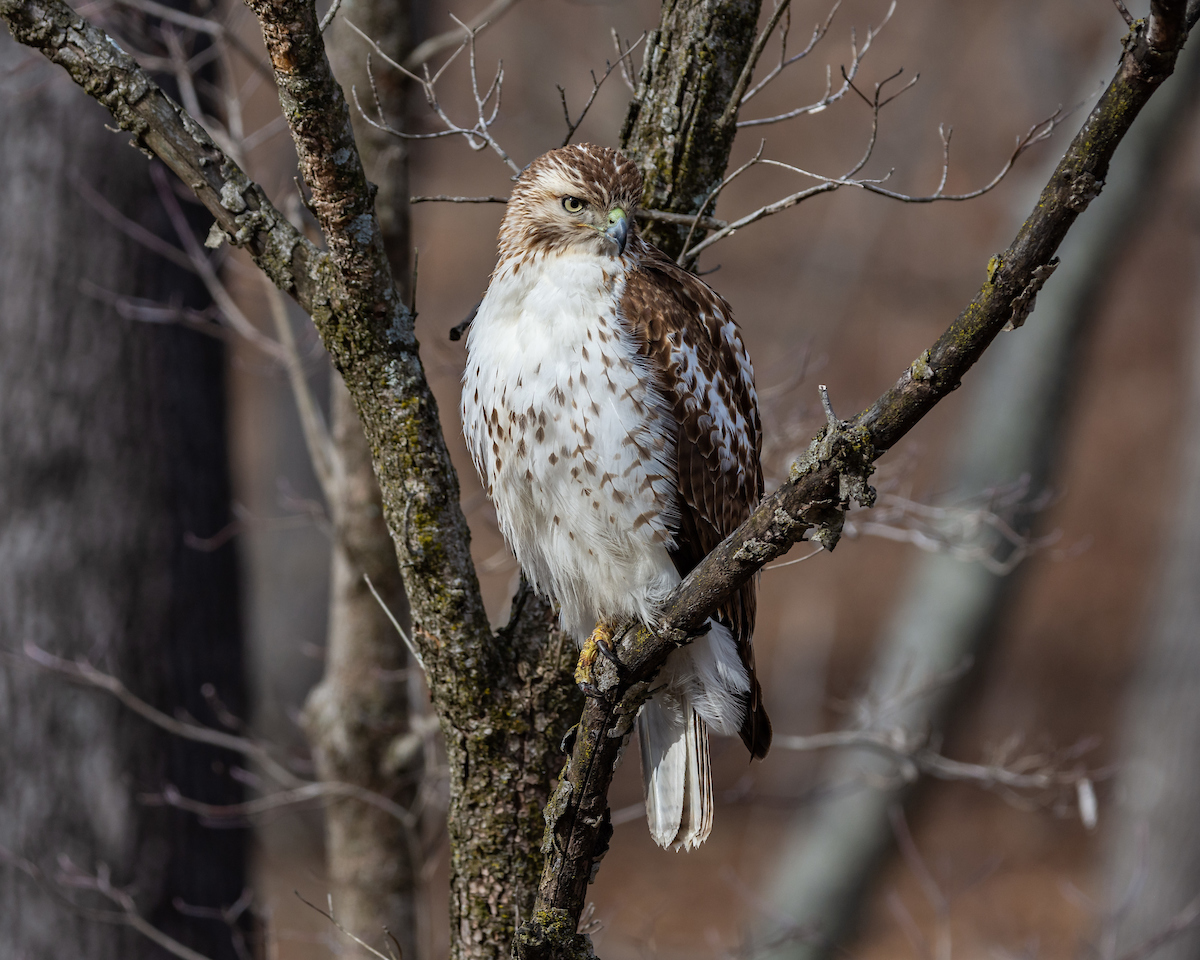
Pine Siskin (Spinus pinus) enjoys a snack while hanging upside down. According to the St. Louis Audubon Society, this bird can be rare one year, then common the next. Photo by Matilda Adams/Missouri Botanical Garden.Blue grosbeak (Passerina caerulea), hangs from a grass stalk. Though listed as “uncommon” in the St. Louis area, the St. Louis Audubon Society says it can regularly be spotted in semi-open and scrubby areas or woodland edges. Photo by Matilda Adams/Missouri Botanical Garden.An Eastern Bluebird (Sialia sialis) perches from the branches of a magnolia tree starting to bloom. According to the St. Louis Audubon Society, efforts to set up nest boxes have helped keep the bluebird population healthy in the area. Photo by Matilda Adams/Missouri Botanical Garden.Two bald eagles (Haliaeetus leucocephalus) fly together over Shaw Nature Reserve. Despite being a national symbol of the United States, bald eagles were considered threatened or endangered for many years. Though there is still a conservation concern for the species, protection measures have allowed the birds to repopulate according to the Missouri Department of Conservation. Photo by Matilda Adams/Missouri Botanical Garden.A ruby-throated hummingbird (Archilochus colubris) hovers near a field thistle (Cirsium discolor). Photo by Matilda Adams/Missouri Botanical Garden.Tow Tufted Titmice (Baeolophus bicolor) rest on a birdfeeder while the snow falls around them. The Missouri Department of Conservation says this species relies on natural holes, nest boxes, or cavities left by woodpeckers for nesting. Photo by BailieKleekamp/Missouri Botanical Garden.Ducklings enjoy the wetland habitat at Shaw Nature Reserve. The habitat stretches 32 acres and houses eight ponds. Photo by Matilda Adams/Missouri Botanical Garden.A red-tailed hawk (Buteo jamaicensis) watches the winter landscape from the branches of a small tree. This federally and state-protected bird plays a vital role in population control for rodents and small mammals in Missouri. Along with an important role in the ecosystem, the feathers of the red-tailed hawk are considered to be sacred by many indigenous tribes. Photo by Matilda Adams/Missouri Botanical Garden.
Bugs, Insects, and Arachnids at Shaw Nature Reserve
A monarch butterfly (Danaus plexippus) rests on a rough blazing star (Liatris aspera). Monarchs frequent Shaw Nature Reserve because of the wealth of wildflowers available there, but the population is in decline. Photo by Matilda Adams/Missouri Botanical Garden.
Learn more about pollinators
The Sophia M. Sachs Butterfly House hosts the Project Pollinator Program, designed to educate the public about the diversity of pollinators in our area and provide resources for growing pollinator gardens in public and private spaces
A hummingbird moth (Hemaris thysbe) hovers near a cluster of Golden phlox (Phlox paniculata) flowers. This species does in fact look and behave similarly to hummingbirds and is sometimes difficult to distinguish from the birds. Photo by Matilda Adams/Missouri Botanical Garden.An Orb Weaver (Neoscona crucifera) rests on a dew-covered web. Orb weavers get their name from the round webs they weave. Photo by Bailie Fischer / Missouri Botanical Garden.A Spicebush Swallowtail (Papilio troilus) rests on the petals of a coneflower. Spicebush swallowtails are native to Missouri and can often be spotted at the Nature Reserve. Photo by Matilda Adams/Missouri Botanical Garden.A dragonfly (Celithemis eponina) hangs onto a small stem. According to the Missouri Department of Conservation, nine Missouri dragonflies are species of conservation concern, including the endangered Hine’s emerald which is federally protected. Matilda Adams/Missouri Botanical Garden.A wolf spider ( genus Tigrosa) crawls through the fallen leaves. According to the Missouri Department of Conservation, more than 40 species of wolf spiders can be found in the state. Photo by Bailie Fischer/Missouri Botanical Garden.Both annual and periodical cicadas can be spotted at Shaw Nature Reserve. In 2024, St. Louis welcomed around 60 billion cicadas during the periodical emergence. Photo by Matilda Adams/Missouri Botanical Garden.
Reptiles, Amphibians, and Fish at Shaw Nature Reserve
An American bullfrog (Lithobates catesbeianus) blends into the greenery of wetlands habitat at Shaw Nature Reserve. The Nature Reserve partners with the St. Louis Zoo to host the Frog Watch USA program, a long-term community science monitoring program of frogs and toads. Photo by Kathy Melton/Missouri Botanical Garden.A five-lined skink (Plestiodon fasciatus) enjoys a moist log. One of the most notable characteristics of a skink is its ability to break off its tail to escape a predator. Photo by Bailie Kleekamp/Missouri Botanical Garden.A small turtle rests on a log in the wetlands habitat. Shaw Nature Reserve is home to many turtles that can be spotted in the habitat and along the roads. Photo by Matilda Adams / Missouri Botanical Garden.A prairie lizard (Sceloporus consobrinus) hangs from a tree. Prairie lizards often live along the woodland edges and on rocky glades. Photo by Matilda Adams/Shaw Nature Reserve.A central newt (notophthalmus viridescens louisianensis) crosses a sidewalk. According to the Missouri Department of Conservation, the central newt is Missouri’s only newt. Photo by Kathy Melton/Missouri Botanical Garden.A red-eared slider (Trachemys scripta elegan) glides through the waters of the wetland habitat at Shaw Nature Reserve. These herbivores help disperse seeds in their ecosystems. Photo by Bailie Kleekamp/Missouri Botanical Garden.Two frogs float atop some lily pads. Frog Watch USA allows volunteers to be directly involved in gathering information that can ultimately lead to practical and workable ways to stop amphibian decline Photo by Matilda Adams/Missouri Botanical Garden.A ribbon snake (Thamnophis sauritus) slithers among the fallen leaves and sticks. This nonvenomous snake is harmless according to the Missouri Department of Conservation and plays an important role in controlling insect and amphibian populations. Photo by Matilda Adams/Missouri Botanical Garden.
Mammals at Shaw Nature Reserve
Two white-tailed deer ( Odocoileus virginianus) fawns huddle together near a road at Shaw Nature Reserve. Though cute, these animals do present a challenge when it comes to horticulture and ecological restoration. The Nature Reserve uses deer-exclusion fencing to limit where the animals can graze. Photo by Matilda Adams/Missouri Botanical Garden.A squirrel enjoys a nut from the safety of a tree branch. Squirrels often accidentally plant trees when they forget where they buried their food caches over winter. Photo by Matilda Adams/Missouri Botanical Garden.Two raccoons (Procyon loto) dip their paws in a pond. Though they can cause damage to farms and gardens, raccoons are important to ecosystems since they are herbivores, carnivores, and can be prey themselves. Photo by Matilda Adams/Shaw Nature Reserve. Tricolored bats (Perimyotis subflavus) hang from a cave ceiling. Shaw Nature Reserve is home to several bat species, including the federally endangered Indiana bat. Photo by Bailie Kleekamp/Missouri Botanical Garden.An Eastern chipmunk (Tamias striatus) enjoys a snack on a fallen branch. The Missouri Department of Conservation says the chipmunk’s food habits influence the growth of certain plant species and act as a partial check on insect populations. Photo by Kathy Melton/Missouri Botanical Garden.A nine-banded armadillo (Dasypus novemcinctus). Because armadillos can carry the Hansen’s disease (leprosy) bacterium, they are sometimes used in research of the disease. According to the Missouri Department of Conservation, there have been no armadillo-transmitted leprosy cases in Missouri, but you should always wear gloves if you must handle armadillos, alive or dead. Photo by Bailie Fischer/ Missouri Botanical Garden.Three Eastern cottontail rabbits (Sylvilagus floridanus) hop through the tall grassy habitats of Shaw Nature Reserve. Though sometimes a nuisance to gardens, rabbits are an important link in Missouri’s food chain. Photo by Kathy Melton/Missouri Botanical Garden The Virginia opossum (Didelphis virginiana) is North America’s only native marsupial. Marsupials are mammals that raise their young in a pouch. Photo by Matilda Adams/Missouri Botanical Garden.
Enjoy more wildlife photography
In 2025, you can enjoy more wildlife and landscape photography at the Shaw Nature Reserve: Nature in Focus gallery, located inside the Jack C. Taylor Visitor Center.
As part of you Member Speaker Series, Missouri wildlife photographer Danny Brown also shared his favorite images and anecdotes from more than 15 years of photographing plants, birds, mammals, and other wildlife at the Nature Reserve.
Take your own wildlife photos
For those wanting to capture their own memorable shots, the Missouri Botanical Garden offers photography classes at Shaw Nature Reserve.
Be sure to share your photos with the Nature Reserve on Facebook and Instagram!
Jessika Eidson | Public Information Officer
Thanks to our staff and volunteer photographers who capture the beauty and authenticity of the wildlife at Shaw Nature Reserve. Thanks to the Missouri Department of Conservation and St. Louis Audubon Society whose online resources were used to provide information about the animals featured in this blog.


Leave a Reply