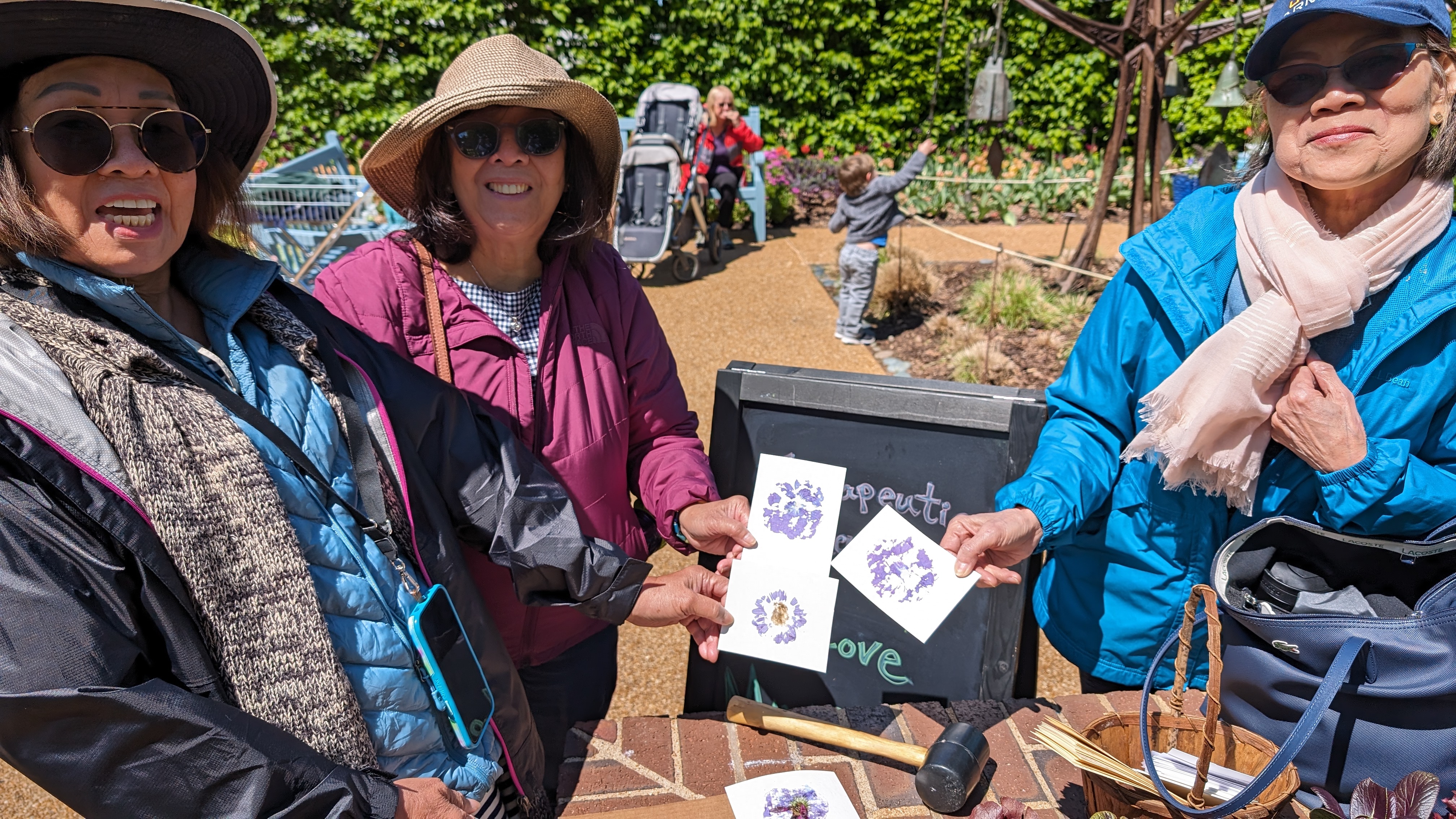

The Missouri Botanical Garden’s commitment to connecting people to plants in order to preserve and enrich life is exemplified by the work of the Therapeutic Horticulture program
The program is designed to deepen each participant’s connection to nature with the goal of improving well-being. This is done through hands-on activities and practices.
What is therapeutic horticulture?
Therapeutic Horticulture is a process in which participants improve their well-being by connecting with nature in a variety of methods.
“I go to nature to be soothed and to have my senses put in order.”
– John Burroughs
The pathways to well-being are many and as varied as the people following them. Gardening, be it a container of basil, a plethora of raised beds, or a native garden, is the perfect activity to bring well-being to the forefront.
As a person plants and weeds and waters and harvests, each step is an opportunity to slow down. It is an opportunity for senses to engage with nature and to feel a connection to what is being nurtured.
Other paths to wellbeing can include meditation in nature, nature journaling, making art with natural materials, and approaching time in nature at a slower pace through an intentional walk.
It can also be informal exploration of nature through the senses.

At the core of therapeutic horticulture is the practice of using the senses to be more present and aware of the natural world around you.
What are the benefits of therapeutic horticulture?
Therapeutic horticulture programs are found in a wide variety of healthcare, rehabilitative, and residential settings according to the American Horticulture Therapy Association. The components of a therapeutic horticulture program are:
- The engagement of a participant in active or passive horticultural-related activities.
- The participant has an identified disability, illness, or life circumstance requiring services.
- The activity is facilitated by a registered horticultural therapist or other professional with training in horticulture.
- The participation is in the context of the goals and mission of the organization.

Practitioners have documented the benefits of therapeutic horticulture through research as well as anecdotal recording of people’s responses to a nature-based interaction. Physical responses have included:
- Lower blood pressure, decreased muscle tension, and reduced stress levels.
- Other benefits of therapeutic horticulture include a deeper appreciation for the natural world.
- There is also evidence of a deeper connection to others if the activity is done with a group.
What kind of programming does therapeutic horticulture offer in the community?

The Garden’s Therapeutic Horticulture team partners with several groups in the St. Louis area to offer tailored activities to participants.
A significant amount of programming occurs in medical facilities, including cancer centers, bedside in hospitals, with hospital staff and medical students.
Other partners include social service agencies, senior living facilities, and community centers. Activities include flower arranging, creating herbal tea blends, sachets, nature printing and much more, all designed to connect the individual to the natural world.

“In some cases, we actually work with other therapists to reach a particular therapeutic goal for an individual such as stress reduction, improving fine and gross motor skills, language skills,” said Jennifer Smith-Simms, Manager of Public Education Programs at the Garden. “Sometimes it is generally a diversion from what life throws at them.”
What kind of Public programming does therapeutic horticulture offer at the Garden?


Community partners often request Therapeutic Horticulture sessions to take place on the grounds of the Garden. Many of these groups also have family nights during the spring and summer months when the Garden is open specifically for the group, with activities and walks designed for their group’s interests.
The Therapeutic Horticulture team also offers a number of classes in the class catalog. Classes include Nature Journaling, All about Tea, Beyond the Growing Season, and Knitting in Nature. These classes are open to anyone who signs up.
How can I Start Practicing therapeutic horticulture on my own?
Here are a few beginner tips for incorporating therapeutic horticulture into your life.
1. Take a 1-minute nature vacation
One of our favorite suggestions for those interested in exploring a deeper connection with nature with just a little bit of time, is a one-minute nature vacation.
Pause sometime during the day, perhaps as you leave home in the morning or looking out the window while drinking your morning coffee, or sometime in the middle of a busy day, step outside.
Be attentive to what you see, hear, notice, wonder about. Use the minute to bring your senses into focus on the natural world. Notice the calm that overcomes and embrace it. Now move on with the day.

You can also try a color walk or rainbow walk. Color walks encourage participants to stay present by following or seeking out a certain color in their environment, while rainbow walks challenge you to find each color of the rainbow on your walk.
2. Visit the Sensory Garden and Japanese Garden

Designed to delight the senses, the Zimmerman Sensory Garden offers an engaging sensory experience for both the young and young-at-heart.
Here you can smell the scented flowers and spicy herbs, hear the trickle of the Shell Fountain and the ring of the Solari Bell Tree and touch the texturally tantalizing annuals, perennials and herbs.
Individuals of all abilities can enjoy what this garden has to offer.


Right: A horticulture staff member rakes lines around the stones of the dry garden area.
One of the most serene areas to connect with nature at the Missouri Botanical Garden is in the Japanese Garden – and for good reason.
The garden’s design was influenced by Shinto, the animistic Japanese religion which emphasizes harmony with nature and the spirits, and Zen Buddhism which encourages mindfulness and an interconnectedness with nature.
From precise lines drawn in the dry garden beds, to the stones on the pathway to signify the beginning of journey, the Japanese Garden offers plenty of opportunities to be present in nature.
3. Bring Nature to You
Especially during the winter months, it can be challenging to connect to nature when you just want to be warm and cozy.
One way to connect with nature is to bring the outdoors in. Having rocks, acorns, shells, flowers, or artwork of nature can bring joy and reminders of the natural world. Be sure to follow the rules and guidelines anywhere you may want to collect natural mementos

Well-Being Week at the Garden
Try hands-on activities with our Therapeutic Horticulture team March 17-March 21.
Written by Jeanne Carbone , Supervisor of Therapeutic Horticulture and Jessika Eidson, Public Information Officer.


Leave a Reply