Open your Instagram feed or any gardening magazine and you’re likely to see examples of these home gardening trends and styles.
Even though fads come and go and what’s popular now in the world of gardening might not be so trendy next year, it can be fun to experiment with different plants and designs. Some trends, like low maintenance, sustainable landscapes will always be in style.
1. Cut Flower Gardens

This home gardening trend will have both your garden and your home looking and smelling wonderful. Fresh cut flowers are any easy way to bring the beauty of the outdoors in.
Sourcing cut flowers locally is better for the environment, since around 80% of cut flowers sold in the United States are imported. And could anywhere be more local than your own garden?
Tips for cutting gardens: When cutting flowers in your garden, always use clean, sharp scissors or pruners, and avoid spreading diseases by sanitizing your tools between plants. Bring a bucket or pitcher of water out with you and place the cut flowers in water immediately.
Best plants to grow in Your cut flower garden
Did you know you can search for plants that can be used in fresh cut arrangements using our Plant Finder database? Simply select “Good cut” under Flowers in the Advanced Search field.

Best Herbaceous Perennial: Salvia nemorosa (meadow sage) and its relatives.
Popular varieties include ‘Wesuwe’ and ‘May Night.

Best Annual: Gomphrena globosa (globe amaranth)
Perfect for a sunny spot almost anywhere, from a large garden bed to a humble porch pot.

Best Shrub: Calycanthus floridus (Carolina allspice)
You can bring the unique color and fragrance of this shrub indoors as cut branches. Split the end of the stem to increase water absorption.
2. Meadow and prairie gardens

Imagine a field of multicolored flowers waving in the breeze, with blooms from spring through fall. Birds and insect pollinators of all sorts find food and shelter among the mixture of grasses and forbs.
This vision can become a reality in your landscape by creating a meadow or prairie garden.
Meadow and prairie are both words used to describe open, grass-dominated habitats, but meadows are typically wetter and have more cool-season grasses, while prairies tend to be drier and home to more warm-season grass species.
This naturalistic garden style can include both perennial and annual, and native and non-native species usually established using seed. Once mature, weeding and maintenance are kept to a minimum.
The density of plants will help to keep weeds at bay, and a yearly cut-back is all that is needed to keep a meadow or prairie planting looking good. Large or small, using seeds or plants, give this home gardening trend a try.
3. Reducing use of peat
Peat is a naturally occurring material used widely in the horticulture industry. It holds onto moisture readily while still maintaining a loose texture with plenty of air pockets, making it an excellent choice for general purpose potting mixes.
However, there are growing concerns related to the sustainability of peat harvesting, and gardeners looking for alternatives have other options. Peat-free potting mixes usually replace the peat with other materials such as wood pulp, coconut coir, rice hulls, compost, or a mixture of these.
For now, bagged peat-free potting mixes are more expensive than their counterparts with peat, but they are available.
You can also try making your own peat-free potting mix. Start with a 2:1 ratio of coconut coir to compost and experiment with different ratios and ingredients, like bark fines, coarse sand, and leaf mold.
The Garden’s Green Resources Info Service is at your service, to answer any question about living sustainably! Email us at greenresources@mobot.org or call 314-577-0246.
4. Goth gardening

Now for something a little lighter…or maybe darker!
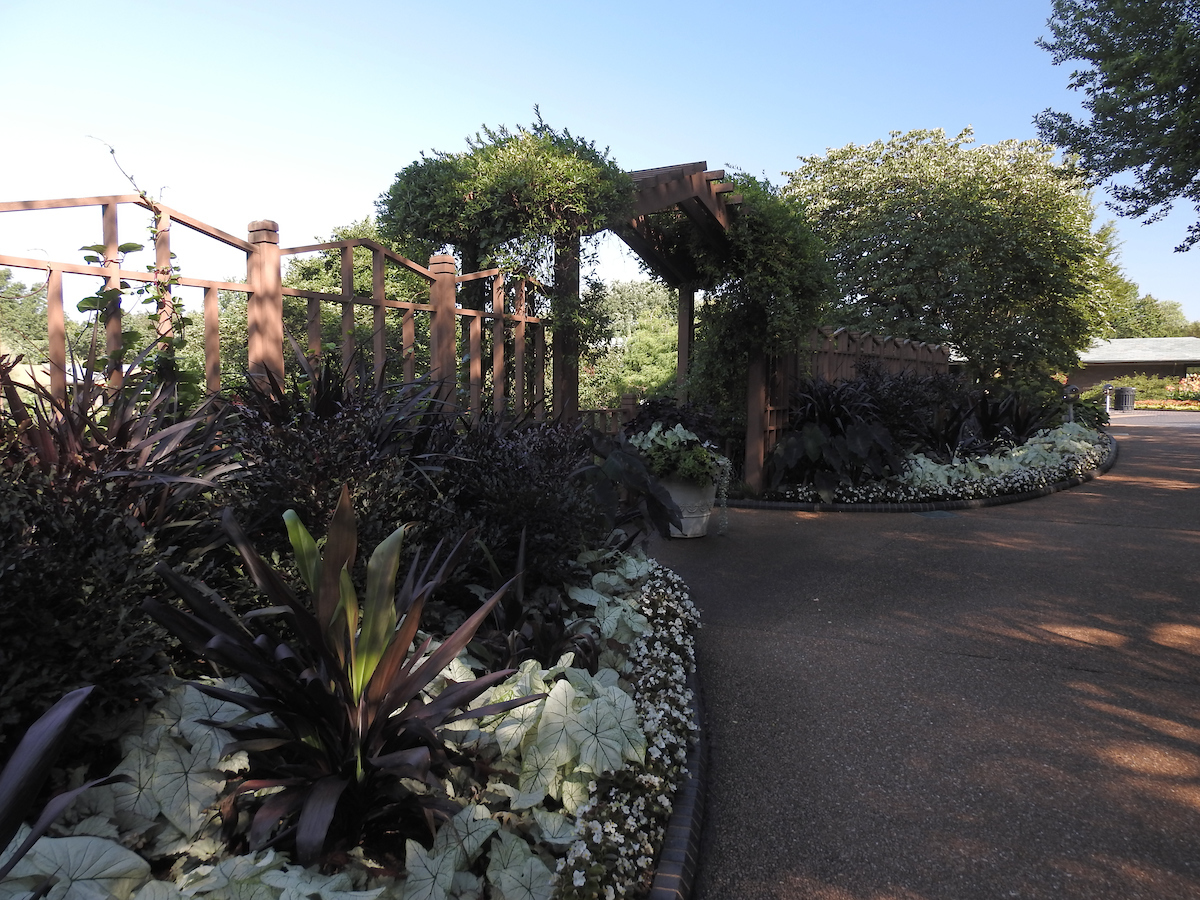
Plants with dark-colored foliage and flowers are all the rage. They contrast very well with lighter pinks, whites, or chartreuse tones.
Add a few of these plants into your mixed perennial beds as accent specimens to really make your other plants stand out. Or try mixing them into your container plantings and watch your neighbors’ heads turn.

These dark tones are primarily thanks to anthocyanins, a group of plant pigments that create shades of red, purple, and black. We can thank anthocyanins for giving foods like red cabbage, blood oranges, and blueberries their reddish-purple hues.
Best plants to grow in your goth garden

Best Herbaceous Perennial: Heuchera ‘Obsidian’
One of the most popular and readily available dark-leaved heucheras, ‘Obsidian’ is known to keep its dark coloration throughout the growing season.

Best Perennial: Hemerocallis ‘Black Stockings’
This reblooming daylily features blackish-burgundy flowers with ruffled petal edges.

Best Annual: Pennisetum ‘First Knight’
A large and in charge ornamental grass that features very dark, purplish-black foliage

Honorable Mention Annual: Petunia ‘Miyopeea’ MIDNIGHT GOLD
One of several black petunias on the market, this cultivar features double blooms with cream-colored margins. Other popular cultivars include ‘Black Cat’ and ‘Black Mamba’.

Best Bulb: Tulipa ‘Queen of Night’
Perfect for adding a bit of contrast to a mix of lighter colored tulips.

Best Shrub: Sambucus nigra ‘Eva’ BLACK LACE
Add one of these statement shrubs to your landscape for the ultimate in dark purple leaves and lacey texture.
We hope you’ll give some of these home gardening trends a try this year. If you need advice or guidance, the William T. Kemper Center for Home Gardening and Plant Finder are wonderful resources to have in your gardening toolbelt.

Got plant questions? Ask the Garden’s Horticulture Answer Service
Garden staff and Master Gardener volunteers provide personalized answers to your specific gardening questions over the phone or through email.
- Phone: 314-577-5143
- E-mail: plantinformation@mobot.org
Leave a Reply