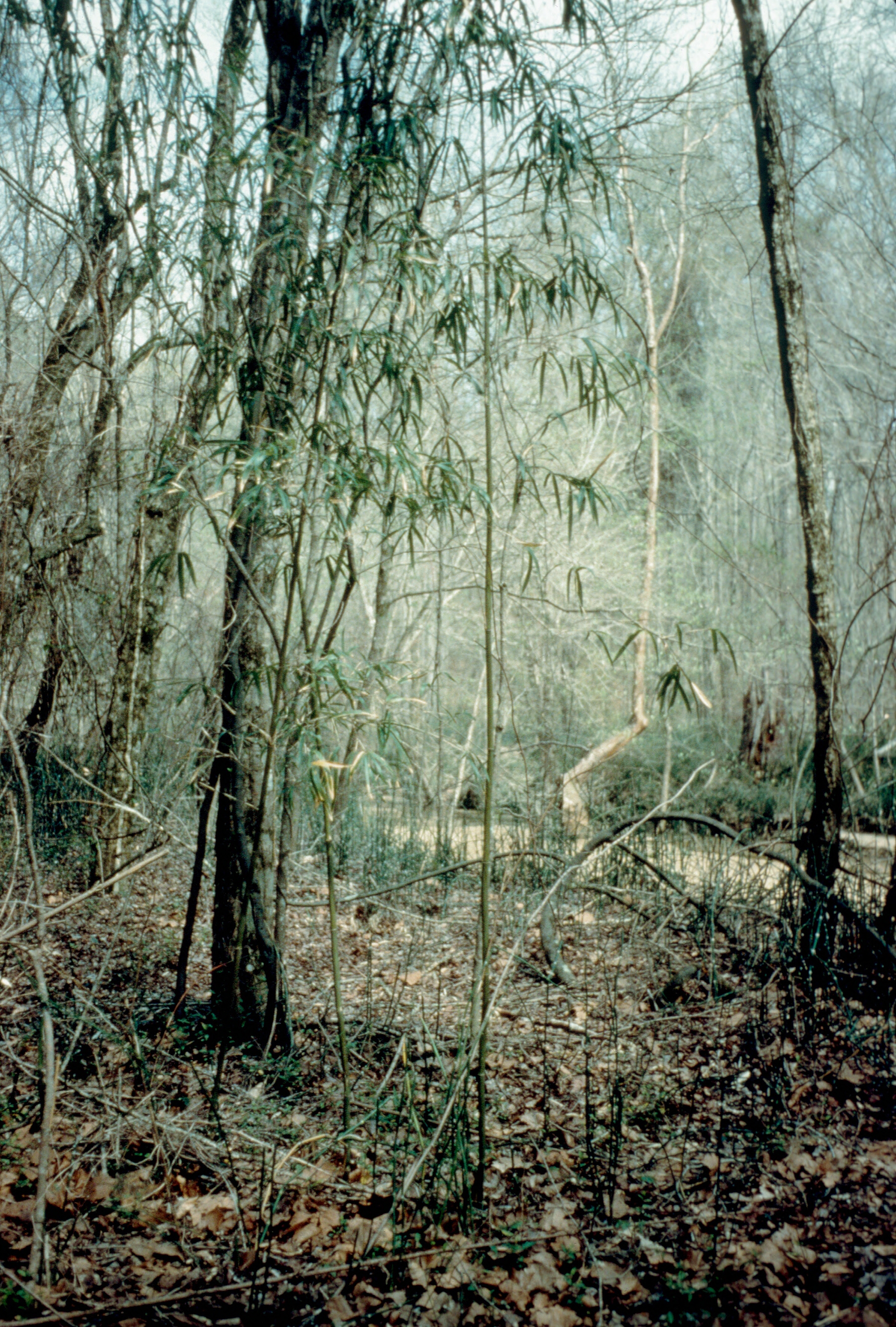
When many people think of bamboo, they may picture serene forests in Asia full of this panda-favorite snack. But bamboo naturally grows on five contents, including one species native to Missouri. Giant cane, Missouri’s native bamboo, is culturally significant for a number of indigenous tribes. It’s also food and shelter for many animals. Once prominent in local landscapes, it is now an endangered ecosystem.

What is Missouri’s Native bamboo?
Arundinaria gigantea is known by many different common names including giant cane, river cane, and canebrake bamboo. The genus Arundinaria is small, containing only a handful of species all native to North America.

Where Does Giant Cane Grow?
Giant cane is the most widespread of the North American species. It grows in bottomland forests, river and stream banks or the bases of bluffs. Its native range is from southern Missouri east through the Ohio River Valley to the Atlantic Coastal Plain and south to eastern Texas and peninsular Florida.

What does it look like?
Mature stands are called “canebrakes.” They and can be very dense, reaching 12 or more feet tall in Missouri. It spreads by underground rhizomes. In warmer climates, giant cane can reach as much as 25 feet tall. Flowering is sporadic, reportedly occurring only once every 40-50 years. This species primarily reproduces vegetatively when pieces of rhizome break off and float downstream.

What human use does giant cane have?
Cane holds cultural significance for a number of Native American tribes including the Cherokee, Choctaw, Seminole, and many others. They use the abundant, flexible, and sturdy, the stems for weaving baskets and mats. Stems are also used for crafting arrows, atlatl darts, spears, blowguns, and fish traps. Flutes and pipes are also made from cane. Early non-native settlers used cane to make fishing poles and as forage for their livestock. Cane pole fishing is still a popular pastime today.

How do animals interact with the plant?
Many animals including white-tailed deer, turkey, black bears, and (historically) bison use canebrakes for shelter and food. Canebrakes also provide nesting habitat for many reptiles, birds, and small mammals. In Missouri’s Bootheel region the swamp rabbit, a species of conservation concern in Missouri, utilizes canebrakes for cover and forage. Swainson’s warbler, considered endangered in Missouri, nests in canebrakes, forested wetlands, and moist thickets. A number of butterfly and moth species rely on Arundinaria species as a larval food source. This includes the southern pearly-eye and lace-winged roadside skipper.

What threats does this species face?
Canebrakes were once a dominant feature along the rivers and streams of the southern United States. Today, it is considered an endangered ecosystem.
The arrival of European settlers marked the beginning of a significant decline in giant cane populations. These settlers actively removed canebrakes make way for agriculture, grazing land, and development. Damming and channelization altered hydrology making areas less suitable to cane. Fire suppression led to forests spreading into canebrake habitat. Invasive plant species have taken the place of canebrakes along riparian corridors. Feral hogs eat young shoots and dig up rhizomes. Estimates of the decline in the giant cane population are as high as 98 percent. This means hundreds of thousands of acres lost.

Saving the species
Conservation efforts including protecting existing species and reintroducing giant cane where it was once common. This will help to preserve its cultural and ecological significance. Giant cane naturalizes along stream banks, pond edges, and moist slopes. There, it will provide habitat for wildlife and reduce soil erosion.
However, giant cane is not well suited for small gardens or home landscapes. The spreading rhizomes can be aggressive and may require control measures such as hardscaping or other barriers to keep it from overtaking a smaller space.

Where can I see the species in the Garden?
The Garden has displays of giant cane in the Children’s Garden and in the Japanese Garden.
Justine Kandra
Horticulturist

Leave a Reply