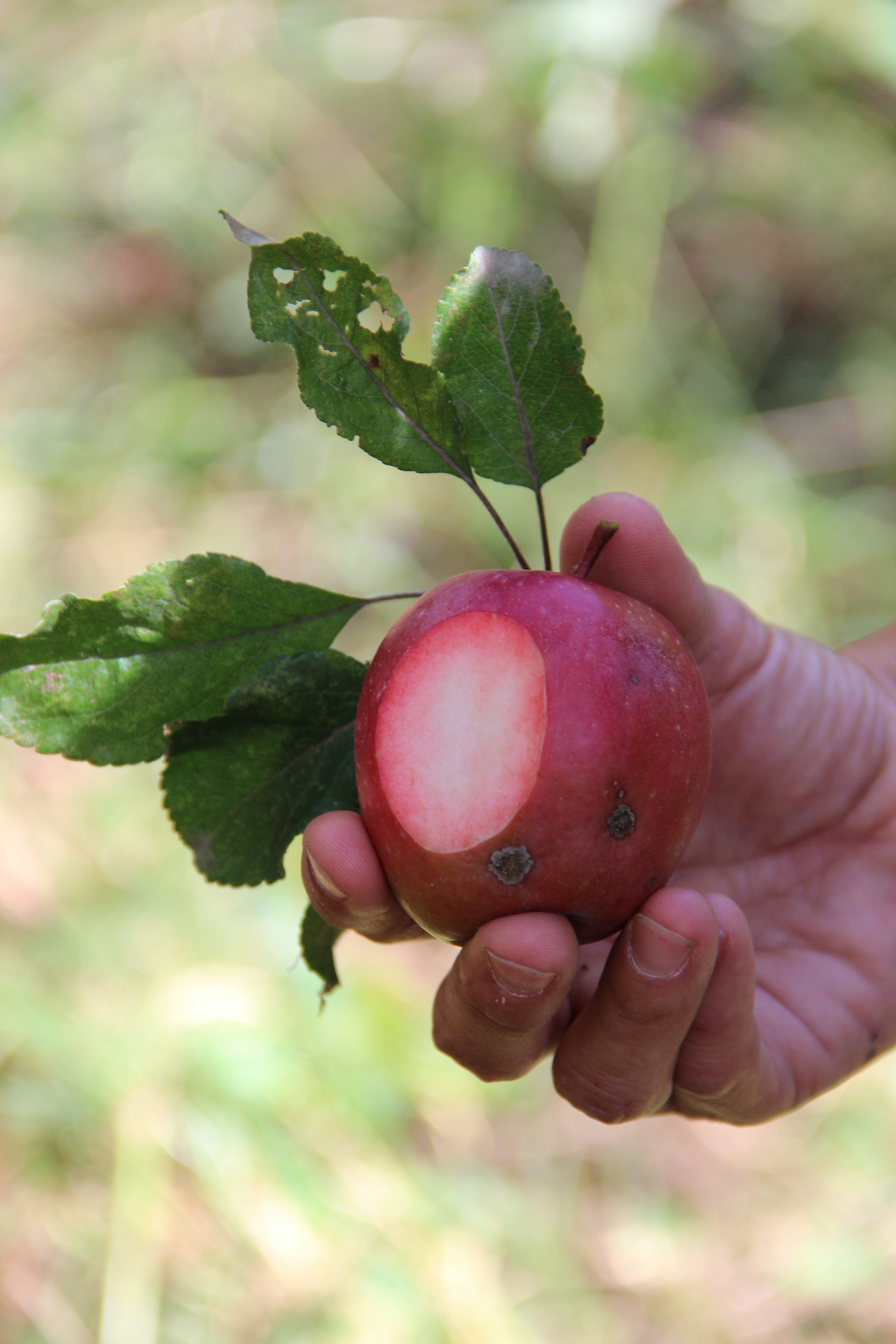
Over the past seven years, the Missouri Botanical Garden has been studying and working to preserve the walnut-fruit forests of Kyrgyzstan. The plants of this unique ecosystem provide an opportunity to not only study the ancestors of the modern plants we eat, but they could be the key to preventing future food insecurity.

In most modern grocery stores, you usually can find your favorite piece of produce and expect it to have the same look, taste, and smell regardless of the region or season you are in. Over the past several centuries, agriculture has become streamlined for efficiency and output. But this reliability has negative side effects: limited genetic diversity within crops and, consequently, a limited resistance to pests, diseases, and climate change.
Unlike the apples and plums you may find in the produce section, wild crops in Kyrgyzstan have a much more diverse genetic makeup. The mountains of Central Asia are considered a biodiversity “hot spot” and are home to at least 1,500 endemic plant species, or species that don’t occur anywhere else in the world. Because of this, the Missouri Botanical Garden has been working in partnership with the local scientists in the region to study and conserve both the plants and habitats they grow in.
Researching crop wild relatives in the mountains of Central Asia

In 2017, the Garden received funding from the Franklinia Foundation to create a plan for conservation of these crop wild relatives in Kyrgyzstan.
Over the past 50 years, 90% of the forest has been lost to widespread overgrazing, deforestation for agriculture and firewood, overcollection of fruits, landslides as soil stability declines, and climate change.
Garden staff began working directly with the local botanical garden, Gareev Botanical Garden in Bishkek, as well as the Archa Initiative Public Foundation in nearby Tajikistan. The Garden is also partnering with Fauna and Flora International for this project.
Creating a seed bank in Kyrgyzstan
One of the first steps to protect these crop wild relatives from being lost was to ensure there was a place in Kyrgyzstan to house and study them.
Staff from both botanical gardens worked together to create a seed bank at Gareev Botanical Garden and do training on seed cleaning and storage.
Similarly, seeds of these crop wild relatives are also being stored in the Seed Bank at Shaw Nature Reserve. The seeds are kept in freezers, seeds are kept in freezers, where they can be stored for future use in scientific research or reintroduction.
Learn more about the seed bank at Shaw Nature Reserve >


Collecting samples
The Garden staff worked with collaborators in Kyrgyzstan to plan several field expeditions, with the goal of collecting seeds or cuttings, DNA samples, and herbarium vouchers (usually pressed and mounted plant samples) of certain species.
The seed was stored in the seed bank at Gareev Botanical Garden, with some seeds from each collection being backed up at the Missouri Botanical Garden’s seed bank. The DNA and herbarium vouchers will be used to document these species and understand the genetic diversity that exists in the wild.


Cataloging Living Collections
As the team was in the field collecting seeds, cuttings and DNA and studying the plants, they kept notes on the notable plants they encountered.
This data was later entered into a digital database called The Garden’s Living Collections Management System.
This living collections data helps staff log new findings, look back on previous findings, and collaborate with other researchers. Among the data kept in living collections database are:
- What the plant is called (taxon)
- When the plant came into the collection
- How many samples and what type of samples (seeds, plantlings, etc.) are in the collection
- A description of the plant and those growing around it
- The plant’s habitat and growing conditions in the wild like soil condition and sun exposure
- Where the sampling currently is (seed bank, nursery, display)
- Photos of the plant’s seeds, fruit, and more
What’s next for the Kyrgyzstan project?
Throughout the expeditions, Garden staff and their colleagues collected seeds and cuttings for propagation and leaves for DNA extraction. That DNA is currently being studied by a geneticist to determine what steps should be taken for conservation of crop wild relatives..

This data will be used to determine which trees have the best genetics to be reintroduced into the forests of Kyrgyzstan. Genetic diversity in these forest is important to ensure they can adapt to environmental changes and resist pests and diseases to maintain the health and vigor of the species.
As secondary effect of genetic diversity is curbing risks of current and future food insecurity.
The Garden will be working hand-in-hand with the local community to plant and cultivate these important trees while keeping records of their growth.
Where to see Kyrgyz crop wild relatives in the Garden
An important part of this project is education the public on the importance of crop wild relatives. One way the Garden is doing that is by growing and displaying the plants at the Gareev Botanical Garden, as well as here at the Missouri Botanical Garden.
Like anything in the Garden, these Kyrgyz plants are not always blooming, but we encourage guests to keep an eye out for them as they explore the Garden.

Bakewell Ottoman Garden
“Here, guests can see Malus niedzwetzkayana (red-fleshed apple), Prunus dasycarpa (black apricot), and several roses collected in Kyrgyzstan.
Photo by Tom Incrocci / Missouri Botanical Garden.

Seiwa-en, Japanese Garden
The Japanese Garden in the southwest corner of the Garden contains contains Prunus armeniaca (apricot) and Prunus sogdiana (cherry plum).
Photo by Mary Lou Olson / Missouri Botanical Garden.

Heckman Rock Garden
Located just outside the Climatron® and the Temperate House, the Rock Garden includes Ephedra equisetina (joint-pine), Chesneya ternata (chesnya), Cerasus erythrocarpa (shrub cherry), as well as thyme and gypsophila from Kyrgyzstan.
Photo by Tom Incrocci / Missouri Botanical Garden.

Pfautch Bavarian Garden
The Bavarian Garden is easy to miss, but worth a trip to the very back of the garden. Located behind the Garden’s Administration Building, this garden holds another Cerasus erythrocarpa (shrub cherry),
Photo by Tom Incrocci / Missouri Botanical Garden.
Jessika Eidson | Public Information Officer
Many thanks to Rebecca Sucher, Senior Manager Living Collections Horticulture, for her expert information and insight on this topic.
Leave a Reply