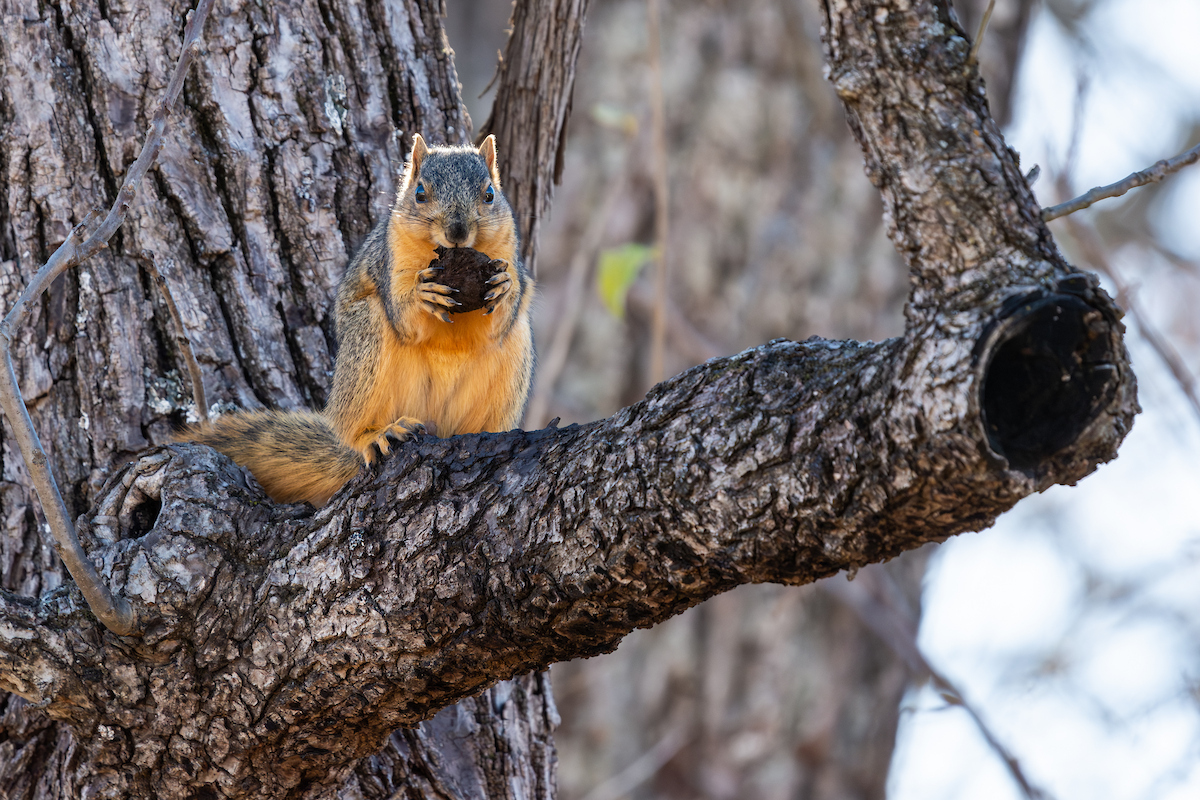
From rural homesteads to city balconies, squirrels provide endless amounts of entertainment or endless strife for Missouri gardeners. Learning more about squirrels will not only help deal with potential conflicts, but may also spark a greater sense of appreciation for our tree-dwelling neighbors.
Squirrels of Missouri

Squirrels are rodents in the family Sciuridae. Other members of the squirrel family that call Missouri home include the eastern chipmunk, woodchuck, and southern flying squirrel. But when gardeners and wildlife enjoyers are talking about “squirrels”, they usually mean tree squirrels.
Tree squirrels are characterized by their bushy tails, slender bodies, large eyes, and acrobatic abilities. They are one of the few mammals that can climb down a tree head-first thanks to their flexible ankles, which can rotate a full 180°. Like all rodents, squirrels have continually growing incisors used to gnaw on twigs and nuts.

In Missouri, we have two species of tree squirrel: the eastern gray squirrel and the fox squirrel. You can distinguish them by their coat color and size.
Fox squirrels are larger, with rusty orange-fringed tails and bellies, while eastern gray squirrels are typically smaller with white-fringed tails and bellies. However, the coloration of both species varies, and individuals with all-black, white, or albino coats exist.
Life cycle of Squirrels

Squirrels typically produce two generations per year, breeding in winter and again in summer. Squirrels either build their own den (called a drey) out of sticks and leaves in the fork of a tree, or use existing shelters such as tree hollows, birdhouses, and attics. They line their nests with moss, dried grass, and feathers.
Litters range in size from 1-8, but 2-3 is most common. The young begin to emerge from the nest at 6-7 weeks old and are fully weaned soon after.
Diet for Squirrels

Squirrels eat a variety of foods based on availability and the season. Nuts, seeds, tree buds, fruit, bark, and mushrooms are all on the menu.
Squirrels also hide food in caches for later use. They use visual landmarks and scent to find their hidden stashes.
Squirrels’ Impact on Ecology

Squirrels are important members of Missouri’s forest ecosystem. By burying tree nuts such as acorns, hickory nuts, and walnuts in large quantities every fall, they aid in forest regeneration. Squirrels are also a favorite food of birds of prey such as owls and hawks, as well as foxes, bobcats, and coyotes.
Human conflicts

Unfortunately, many of a squirrel’s instincts, combined with their ability to adapt to human-dominated environments, put them into conflict with people. Squirrels will dig in freshly planted containers or garden beds, and chew on the edges of plastic pots, outdoor wires, wooden decks, siding, and furniture. They will also gnaw and strip bark from trees. They will raid bird feeders, vegetable gardens, and fruit trees.
Damage mitigation

While you can use fencing to keep other garden visitors at bay like deer and rabbits, squirrels’ ability to climb means nothing short of a full enclosure will prevent damage to prized vegetables.
Repellents such as stinky or spicy sprays and ultrasonic emitters may work for a period of time but rarely long-term.
Loose soil is almost irresistible to a squirrel. They will dig and disrupt the establishing plants. Protect newly planted flower beds with hardware cloth or chicken wire. Place a few larger rocks on the surface of containers until the roots have a chance to grow into the soil. Install baffles on bird feeders to help prevent squirrels from having easy access.

Got plant questions? Ask the Garden’s Horticulture Answer Service
Garden staff and Master Gardener volunteers provide personalized answers to your specific gardening questions over the phone or through email.
- Phone: 314-577-5143
- E-mail: plantinformation@mobot.org
Justine Kandra | Horticulturist with the William T. Kemper Center for Home Gardening at the Missouri Botanical Garden
Leave a Reply