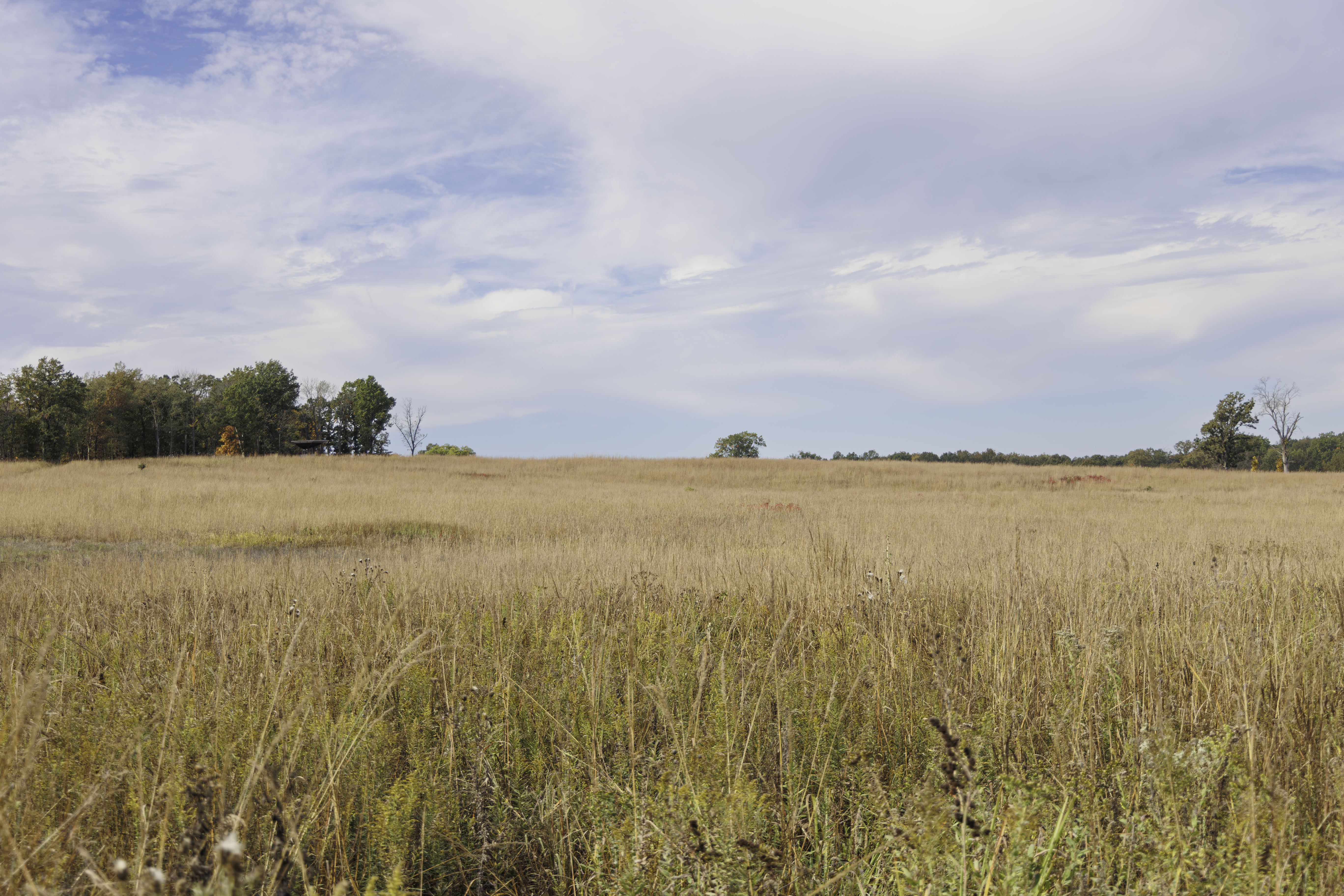
It’s no surprise that rainforests and tundra are among the world’s critical biomes. But Missouri is also home to one of the world’s most important, and threatened, ecosystems—prairies.
Prairie is a critical biome that is rapidly disappearing. Nearly 99 percent of North America’s tallgrass prairies are already gone. But at Shaw Nature Reserve, ecological restoration projects aim to reestablish prairies and the diverse life they hold.
What Is a Biome?

A biome is a major geographic area defined by a specific climate and its flora and fauna.
There are five major biomes on Earth: aquatic, forest, grassland, desert, and tundra. Each biome also contains smaller, more specific categories.
What is a prairie?

Prairies are a temperate grassland in North America. Prairies are home to diverse species of grasses, wildflowers, and unique animals.
What is a critical biome?
A critical biome is a specific ecosystem that is vital for the planet’s overall health and faces serious threats.
Why are prairies critical biomes?

Prairies are home to many diverse species, many of which face the threat of extinction. Grasslands like prairies also play a vital role in storing carbon.
But the U.S. Fish and Wildlife reports prairies are disappearing faster than people can conserve them. Conversion to agricultural land use, urban and industrial development, and invasive species have led to a loss of at least 80% of America’s grasslands, including a loss of 99% of tallgrass prairie.
In Missouri, only an estimated 45,000 acres of original unplowed prairie remains. That’s less than 1 percent of the native prairie at the time of Euro-American settlement.
What is Shaw Nature Reserve’s Role in prairie restoration?

Shaw Nature Reserve’s mission has changed in its 100 year history. Since 1980, Shaw Nature Reserve has become a leader in native habitat management and restoration, native plant horticulture, and environmental education.
The Nature Reserve is home to a variety of native ecosystems: forests, glades, prairies, woodlands, savannas, and wetlands. Restoration work in these areas includes prescribed burning, selective thinning of woodlands, invasive species control, enhancing plant diversity, and reconstructing habitats by collecting and sowing native seed
In recent years, Nature Reserve staff have worked on several projects to restore, or reconstruct, lost prairies.
Wolf Run Grassland Restoration

When you have 2,400 acres, restoring it all to ecological health takes decades. A recent prairie restoration project focused on long abandoned farmland at the Nature Reserve that had become low diversity, a late-successional woodland with dense thickets of invasive species.
In 2021, Nature Reserve’s Restoration team began the Wolf Run Grassland Restoration project. During the first phase, the team removed invasive species including border privet, bush honeysuckle, European buckthorn, lindenleaf viburnum, and Asiatic bittersweet. They also removed large trees, primarily cedars. Much of the cleared trees were repurposed as fire wood, pallets, railroad ties, and wood chips.
Once the area was well prepared, they could begin to sow seeds of native tallgrass prairie plants. The team started with a planting of 1,120 pounds of seeds, comprising 286 species, sown over the first 40 acres of the Wolf Run Grassland Restoration in 2023. In 2024, they planted 1,233 pounds of seeds from 300 species of plants. During the 2025 growing season, staff and volunteers collected a record-setting 1,226 pounds of native seed from 259 species of native plants. They sowed the seeds in early January.
Fighting for Flowers

Shaw Nature Reserve’s 1,200 acres serve as a living laboratory for scientists to study the most effective methods for restoring prairies.
One problem conservationist noticed in restored prairies is that while large native grasses like big bluestem thrive, smaller, but equally important, prairie wildflowers are often underrepresented or absent. Scientists aimed to tackle this by testing methods to suppress the dominant grasses and promote more wildflower growth. To keep the grass at bay, they’ve tried mowing and lightly applying grass-specific herbicides. To promote more wildflower growth, they’ve added seeds of 25 different native wildflower species. They found that combining the tested methods provided the best results. Adding light herbicide set back grasses. Sowing wild flower seeds in the winter promoted wild flower growth. Mowing the following year provided need light for wild flower to thrive.
Establishment mowing experiment


Bottom: The “control” plot that was not mowed at all.
Photos by Andrew Kaul.
Throughout the Midwest it is a common practice to mow new prairies multiple times throughout the growing season to curtail weeds, which can out-compete targeted prairie species. Restorationists refer to this practice as “establishment mowing.”
Experts widely recommend establishment mowing for prairie restoration, but limited data is available the long-term benefits of this strategy.
The ecological restoration team at Shaw Nature Reserve is testing this by mowing small areas a specific number of times the first year. They will then monitor for four more years to see how each area develops and if the establishment mowing had an impact.
Protect Prairies In Your Own Yard

Shaw Nature Reserve has 2,400 acres to work with, but you can make a difference in your own backyard, too! You can create your own “micro-prairie” that will provide habitat and food for native pollinators. Shaw Nature Reserve and the Garden offer classes on gardening with natives, including Native Plant School. You can also visit Shaw Nature Reserve’s Whitmire Wildflower Garden for inspiration.
Leave a Reply