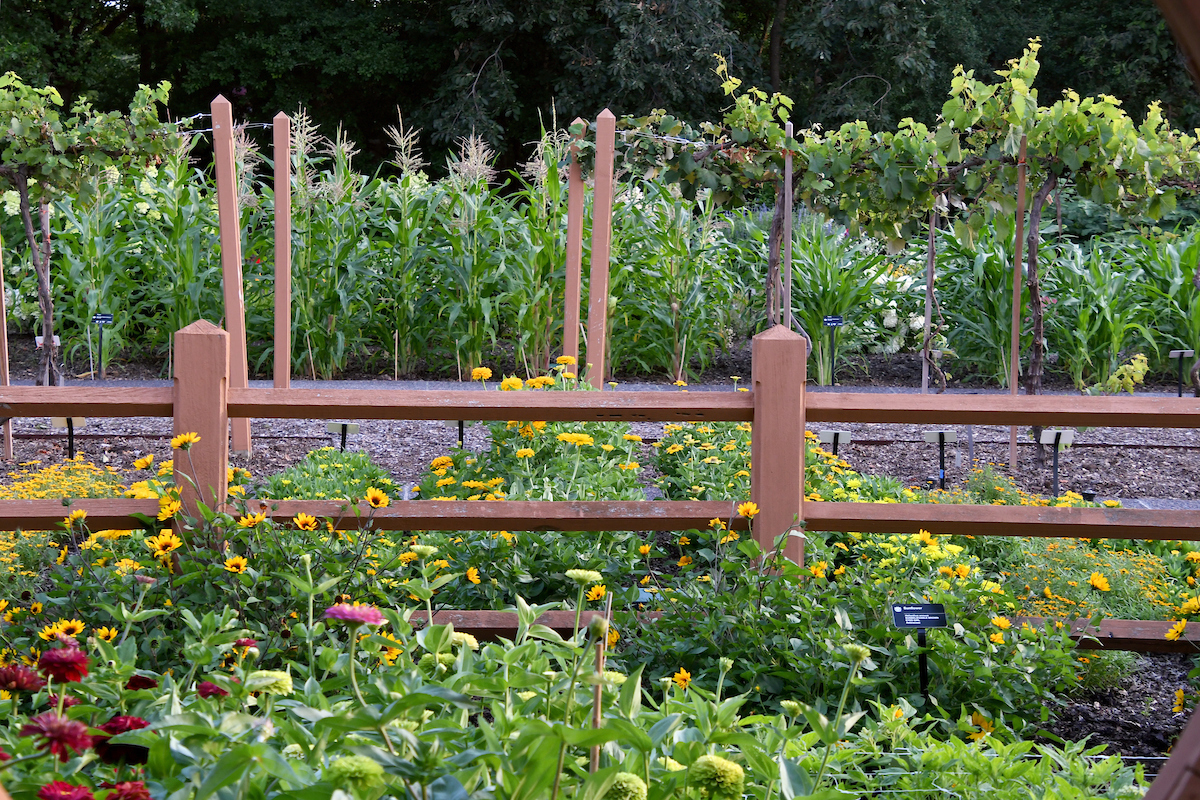
Growing corn (Zea mays) at home can seem daunting at first, and many people may only ever see corn plants growing in the seemingly endless fields that fill farm country. But in reality, corn is easy and fun to grow at home at small scales. With certain considerations to soil, spacing, and pollination, anyone can enjoy the taste of freshly picked corn.

Choosing the right corn to grow
Zea mays, commonly called corn or maize, is a domesticated cereal food crop whose wild progenitors grew in present day Mexico and Central America.
Today there are hundreds of corn cultivars grown for various purposes. Nearly all corn selections fall under one of six major categories:

- Sweet corn
- Popcorn
- Flour corn
- Broom corn (a decorative corn grown for its long fibrous tassels)
- Dent corn (the principle hard corn grown for animal consumption as well as certain heirloom varieties used for roasting, grinding and hominy)
- Flint corn (includes ornamental Indian corn and many varieties that are preferred for cornmeal, polenta, and hominy)
Each type of corn has different characteristics that make it more suitable for certain purposes over others. For example, the high sugar content of sweet corn makes it ideal for eating fresh, while the high starch content of flour corn makes it ideal for making corn flour. The cultural requirements and growing recommendations will be roughly the same regardless of the variety.
When and where to Grow Corn
Corn is a warm season crop, meaning that it will not grow well until soil temperatures warm up and it is intolerant of frost. Seeds are best sown directly into soil that is 60-65°F after the threat of frost has passed.
Corn requires full sun, and does best in fertile, well-draining soils but will also grow in soils with less-than-ideal drainage. The roots of seedlings and young plants are best left undisturbed. Mulch around plants to suppress weeds and maintain even soil moisture.

Corn plants can be quite tall. Planting them on the north side of a shared bed should ensure that they do not shade out other plants. They create adventitious roots from the base of their stems which help to anchor them into the soil, but wind damage is still possible during very strong storms.
Pollination when growing corn
Because corn is wind pollinated, it is best planted in blocks rather than rows. However, hand pollination will typically yield better results for small plantings compared to relying on the wind alone.


Photo by Sundos Schneider/ Missouri Botanical Garden.
Simply harvest the pollen from the tassels at the top of the corn stalk into a paper bag or snip a few of the tassel branches off and sprinkle the pollen on the silks emerging from the ears. This is best done in the morning before the wind picks up.
Cross pollination can be problematic, particularly for sweet corn. For example, if a sweet corn variety is pollinated by a flint corn, the resulting kernels will not be as sweet. Consider only growing one type of corn or planting varieties that mature and form pollen-producing tassels at different points in the season.
Diseases and Pests to look out for when growing corn

Corn is susceptible to a number of pests and diseases. A few common pests include European corn borer, corn earworm, flea beetles, Japanese beetles, fall army worm, and cutworms.
Potential diseases include corn smut, anthracnose, rusts, and leaf blights. Not planting too early, clean garden practices, crop rotation, and planting resistant strains can all reduce disease incidence.
Most pest and disease problems seldom require chemical intervention in the home garden, but corn earworm is the one exception, as this pest can cause considerable damage to a small plot of sweet corn. It is easily controlled by using a mixture of one part neem oil or the bacterium Bacillus thuringiensis (Bt) and 20 parts vegetable, corn, or mineral oil.
Apply about a quarter teaspoon to the top of corn ears where the silks emerge 5-6 days after silk emergence. If applied too early, the oil can interfere with pollination. Corn earworm can also be controlled by choosing varieties of sweet corn that mature early and have tightly held husks.

Discover Zea may’s impact on our culture
Kernels of Culture: Maize Around the World (May 3, 2024 – March 31, 2025) at the Stephen and Peter Sachs Museum focuses on the complex story of one of the world’s most important crop plants – maize (Zea mays).
Leave a Reply