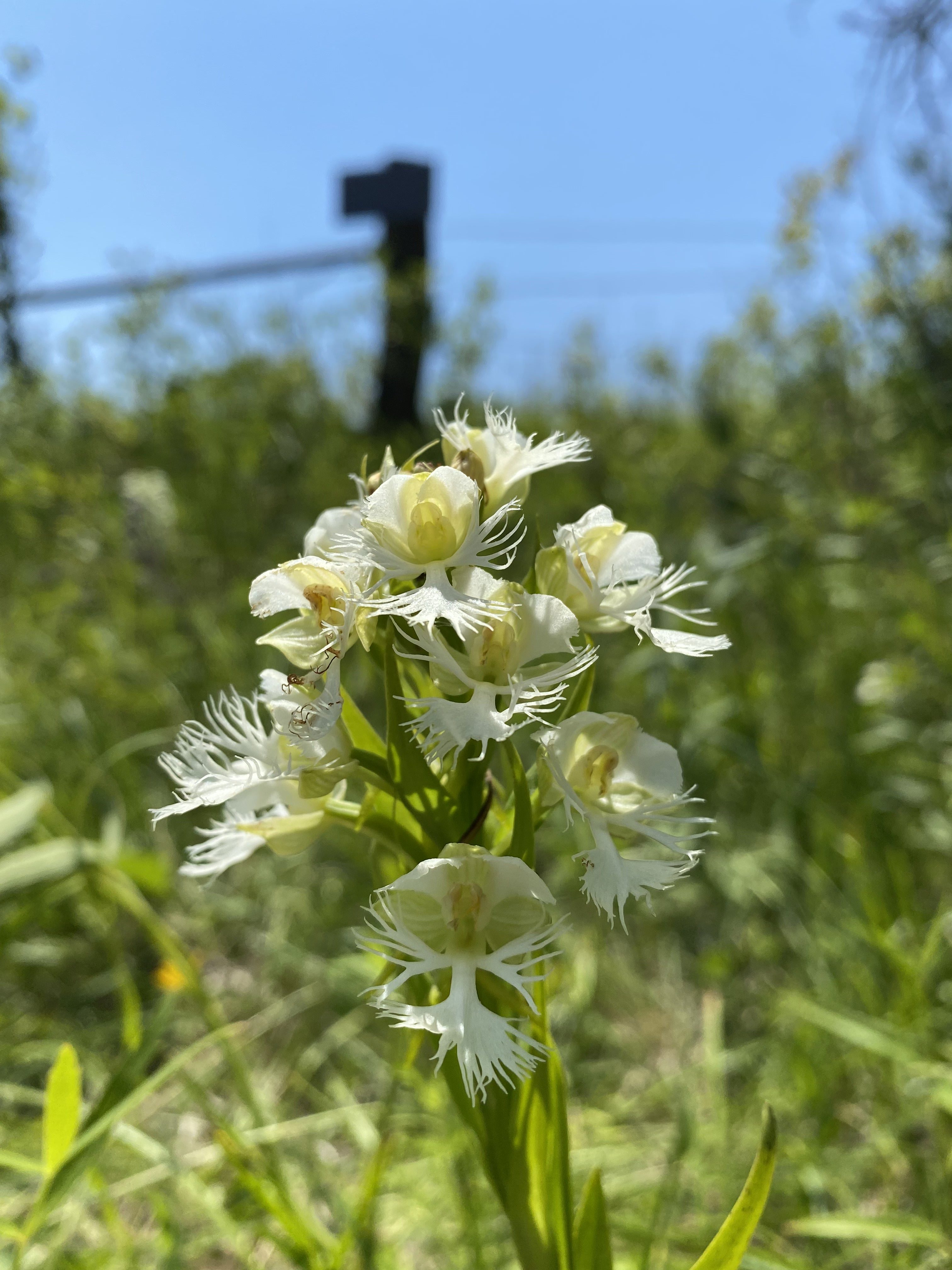
Orchids are one of the largest and most diverse plant families. They are also one of the most threatened. Many species face extinction due to habitat loss and overcollection.
The Missouri Botanical Garden is uniquely positioned to advance a conservation program of orchids due to its existing scientific and horticulture expertise in orchid propagation, rare plant conservation, and habitat restoration. Orchids have been part of the Garden’s history since its opening and the Garden even had a micropropagation lab in the early 1900s.
Leaning on this expertise, Garden staff are focusing on conservation of native orchid species that are dying out due to habitat loss, lack of genetic diversity, loss of pollinators, and other issues.

A Fading Beauty
While many people picture orchids growing in tropical rainforests, they can grow in a diverse range of habitats including deserts, bogs, and prairies – even edging near the arctic circle. Missouri has more than 30 species of orchids, many of which are of conservation concern. The eastern prairie fringed orchid, Platanthera leucophaea, is a federally protected threatened species that is declining due to habitat loss and degradation.
This species’ beauty and rapid decline caught the attention of scientists who began a quest to save it from extinction. Scientists have studied the species in the lab and in its habitat for years, looking at how it best germinates, how human impact (e.g., prescribed burn management) affect its population and flower production, and its intimate relationship with mycorrhizal fungi, which all orchids require to grow in nature.
Orchid seed collecting
Through a grant from the U.S Fish and Wildlife Service, Garden horticulturists set their sights on conservation efforts on this species in 2021. They took three trips to northern Missouri to count and map plants in wild populations and hand pollinate them to maximize their seed production. They also collected seeds to bring back to the micropropagation lab and to store in the Garden’s Seed Bank.

Back in the lab
In the micropropagation lab, Rachel Helmich is building on techniques that have been successful for growing other native orchids. These include symbiotic seed germination, which means growing a specific fungus along with the orchid seed, as well as asymbiotic germination.

“Growing P. leucophaea without reliance on its mycorrhizal fungus has been like creating the most special and perfect dinner you’ve ever tasted,” Helmich explained. “The ingredients need to be healthy, nutritious, and in just the right amounts. One must think like a dietician and primary care physician to the species by determining the best diet and lifestyle approach to produce healthy individuals – in this case: temperature cycling, light/dark exposure, and timing between “meals” AKA moving to new growing media, are all factors to consider.”
As she continues this work, Helmich talks regularly with experts that have had luck with the eastern prairie fringed orchid to share knowledge on what works and what doesn’t. When they successfully grow seeds into plants, the tiny plantlets are transplanted into soil and moved to a greenhouse to be grown into larger plants suitable for planting outdoors.

Growth potential
These successfully grown plants, along with seeds in the Seed Bank, can be used to reintroduce the plant in its native habitat and support species survival in the wild.
“Between the extensive effort across multiple Garden divisions, outside funding, the landowner and land managers of the original collection site, and the outside researchers who are so generous in their willingness to share their experiences with this species, an incredible effort is going towards ensuring this species survives and hopefully, one day, thrives in Missouri,” Helmich said.


Looking to more Missouri native orchids
One way the Garden is working to ensure the persistence of orchids in the wild is through a new project aiming to restore populations of native orchid species at Shaw Nature Reserve. The multi-year project is a partnership between the Garden’s Horticulture division, its Center for Conservation and Sustainable Development, or CCSD, and Shaw Nature Reserve.
“Native orchids have declined in recent decades, and this project uniquely combines the Garden’s expertise in horticulture, research, and restoration to develop methods that will support the reestablishment of these iconic wildflowers in their native habitats,” said CCSD Director Matthew Albrecht.
The first year of the project focuses on four rare native orchid species:
- Oklahoma grass pink, Calopogon oklahomensis
- Putty-root orchid, Aplectrum hyemale
- Greater yellow lady-slipper, Cypripedium parviflorum var. pubescens
- Twayblade, Liparis liliifolia
The team selected these species because they were of conservation concern and historically occurred in the eastern Ozark Border region where Shaw Nature Reserve is located.
Rescue plans
The project, funded by the Albers-Kuhn Foundation, began in 2022 with the team collecting seed and fungal soil samples from the targeted orchid species. In 2023, they started working to determine the best propagation technique for each species. With that information, they will grow genetically diverse samplings of each of the species in the green house. Finally, they will establish populations of native orchids in habitat-appropriate areas at Shaw Nature Reserve.

“An exceptional variety of natural habitats combined with strategic restoration and land stewardship make Shaw Nature Reserve an ideal location to reintroduce populations of rare species native to our region,” said Shaw Nature Reserve Director Quinn Long. “We’re excited about this native orchid project and look forward to further collaboration with colleagues from CCSD and the Horticulture division to conserve regional native biodiversity.”


Leave a Reply