The Missouri Botanical Garden’s 2026 Orchid Show invites guests to take in—not only the beautiful sights—but also the captivating smells of its extensive orchid collection, placing a special emphasis on orchid aromas this year.
Each year, the Garden brings hundreds of orchids from its greenhouses to transform the Emerson Conservatory into a breathtaking display of tropical orchids from around the globe.

With over 5,000 individual plants representing around 700 unique taxa, the dynamic show evolves throughout its run as new orchids come into bloom and are added to the display.

The 2026 Orchid Show highlights the diverse scents of orchids in collaboration with the ‘Smelling the Bouquet’ exhibition at the Stephen and Peter Sachs Museum. Visitors can learn about both the pleasant and unpleasant aromas of orchids, why some orchids emit no scent at all, and the role scent plays in the botanical world.

The 2026 Orchid Show runs through March 1 and is included in Garden admission. Enjoy these beautiful images and then come to the Garden to see (and smell) the orchids for yourself.
Did you know? Not all orchid species have common names or they share a common name, which is why we’ve used Latin names in some descriptions throughout this blog.
Moth Orchids (Phalaenopsis) at the 2026 Orchid Show
The Phalaenopsis genus contains around 45 species of mainly epiphytic orchids native to India, southern China, and Southeast Asia.


Cattleya Orchids at the 2026 Orchid Show
Some of the most popular and easy-to-grow orchids come from the genus Cattleya. These showy plants are native to Central and South America, but can be seen in greenhouses and homes around the globe.


Cultivators love to work with Cattleya, which has over 50 species. There are literally thousands of hybrids, many winning recognition from societies like the American Orchid Society for their beauty and color.

Lady Slipper Orchids (Paphiopedilum) in the 2026 Orchid Show
The Paphiopedilum genus contains around 80 species native to India, southern China, and Southeast Asia. Unlike other popular orchids, these orchids grow on the ground (terrestrial), but they can also be epiphytic or lithophytic.

Paphiopedilum orchids are most known for their unique lower petal, which is formed into a pouch and resembles a slipper. This is where the common name of lady slipper orchids comes from.


2026 Orchid Show
Explore the Garden’s orchid collection through March 1.

Dendrobium Orchids in the 2026 Orchid Show
Dendrobium orchids have a wide distribution and great variation in growth characteristics and floral structure.

They may be evergreen or deciduous, but both types may require a dormant rest phase in winter, or not.


Sundos Schneider
Blooms come in an array of delicate, pastel flowers, occurring along the full length of the stem in some species, or in sprays emanating from the apex of the stem in others.


Dancing Lady Orchids (Oncidium) in the 2026 Orchid
The Oncidium genus includes around 750 species of orchids, and there are many hybrids commonly cultivated for their showy flowers.

These orchids are native throughout the Northern and Southern American regions.


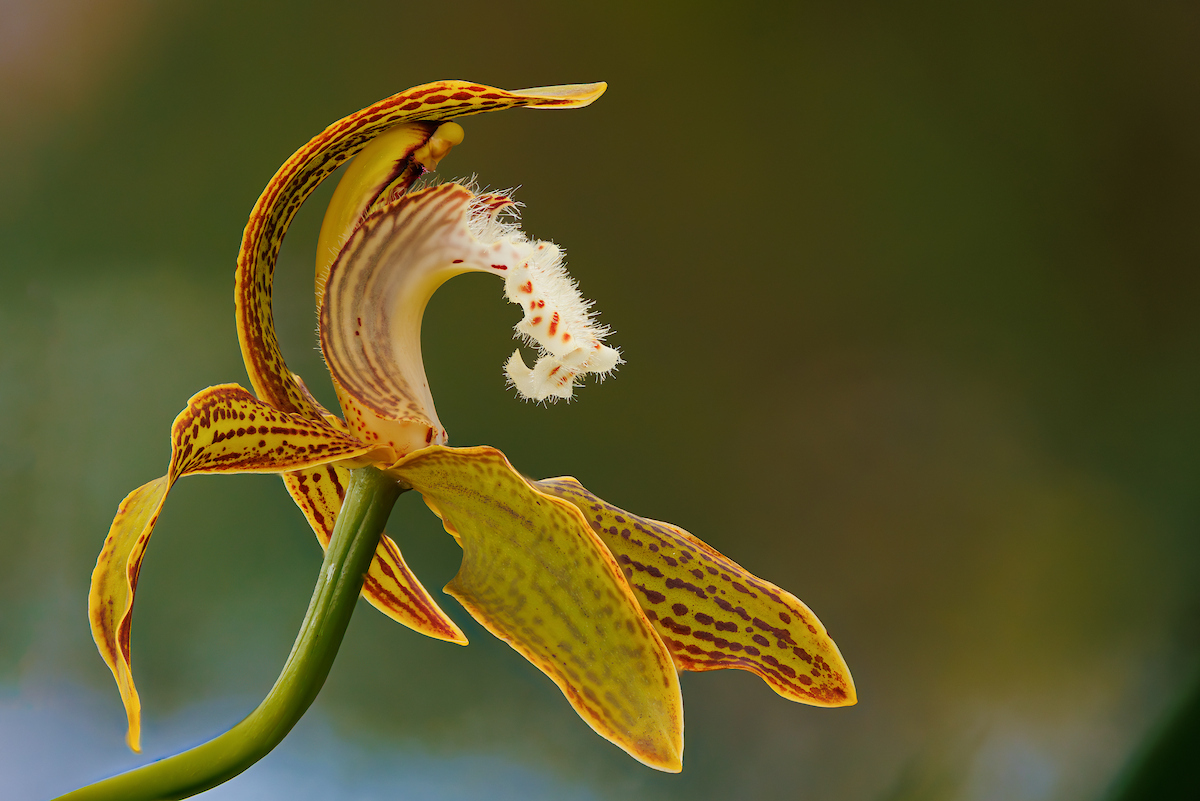
Other Unique Orchids to see at the 2026 Orchid Show
When asked to think of orchids, most people will picture a cattleya, lady slipper, or moth orchid. But did you know there are around 850 genera in the family Orchidaceae?

When you look even closer, you’ll discover around 28,000 species of orchids known to science.

With nearly 700 genera, the Missouri Botanical Garden’s extensive living collection represents only 20% of known genera. Notably, around 10% of this collection is threatened or endangered.


Did you know? Orchid blooms can range in size from a pinhead to the size of a football.


Sundos Schneider.


Copy by Jessika Eidson | Public Information Officer


Thanks to our staff and volunteer photographers who capture the beauty of the 2026 Orchid Show. Thank you to the William T. Kemper Center for Home Gardening, whose Plant Finder information provided interesting facts for many of the photos.
Leave a Reply